
Objective Lens Size
Also called: front lens, aperture, 42 mm
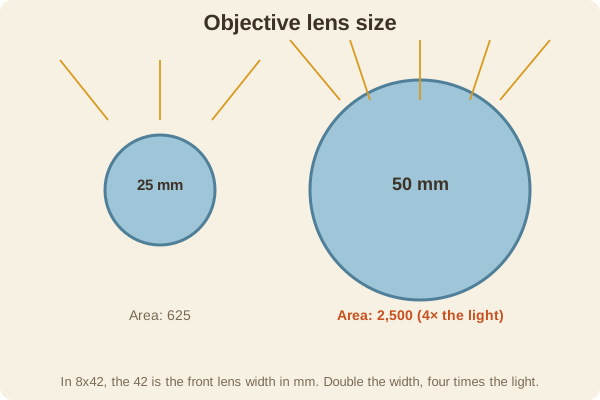
The diameter, in millimeters, of the big front lens. A larger lens gathers more light but makes the optic bigger and heavier.
- Type
- Specs & Terms
- How to read it
- In 8x42, the 42 is the front lens width in millimeters
- Common binocular sizes
- 25, 32, 42, and 50 mm
- Effect
- A bigger lens gives a brighter image in low light
- Used for
- Hunting, Stargazing, Birding & wildlife, Target shooting
What it is good for
- Dawn and dusk hunting.
- Stargazing, where light matters most.
- Choosing between compact and full-size optics.
Where it falls short
- Larger lenses weigh more and cost more.
- In a rifle scope, a larger bell requires taller rings.
- Light-gathering is also affected by coatings and glass quality.
Tips
- 42 mm is a good balance for hunting binoculars.
Works well with
- Exit Pupil: objective divided by power.
- Lens Coatings: also affect brightness.
Field notes
Think of the front lens as a bucket that collects light. A wider bucket catches more.
Related guides
Specs here are typical, not guarantees; models differ, so check the maker's published numbers. Never look at the Sun through any optic without a certified solar filter, and zero or mount a scope with the firearm unloaded and pointed in a safe direction. Rules on optics, such as scopes on certain hunts or lasers and electronics, differ by state; our state resources directory links to each state's official regulations. Want a buying guide? Read Choosing Hunting Optics.