

Lens Coatings
Also called: multi-coated, fully multi-coated, phase coating
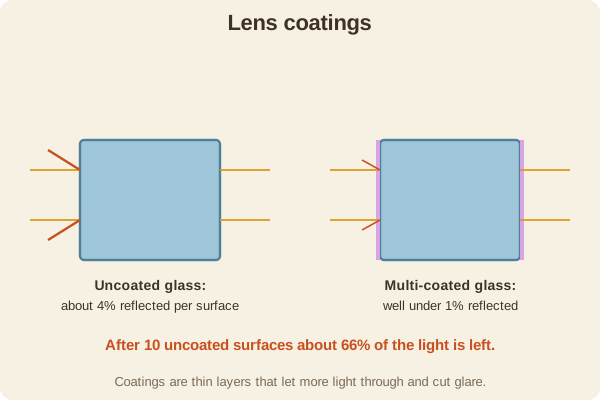
Very thin layers on lens and prism surfaces. They reduce glare and let more light through for a brighter, clearer view.
- Type
- Specs & Terms
- Coated
- At least one lens has one layer
- Fully coated
- All glass surfaces have one layer
- Multi-coated
- Some surfaces have several layers
- Fully multi-coated
- All glass surfaces have several layers
- Phase coating
- On roof prisms, improves contrast and sharpness
- Used for
- Hunting, Stargazing, Birding & wildlife, Target shooting
What it is good for
- Bright, high-contrast images.
- Low-light performance.
- Comparing models at the same price.
Where it falls short
- Marketing terms are not standardized.
- Coatings can wear off from harsh cleaning.
- Glass quality matters as much as coatings.
Tips
- Treat the lenses gently, and use covers when you can.
Works well with
- Lens Care: protects the coatings.
- Roof Prism Binoculars: the type that needs phase coating.
Field notes
Each uncoated glass surface reflects some light. Across many lenses and prisms, those losses add up, which is why coatings help.
Related guides
Specs here are typical, not guarantees; models differ, so check the maker's published numbers. Never look at the Sun through any optic without a certified solar filter, and zero or mount a scope with the firearm unloaded and pointed in a safe direction. Rules on optics, such as scopes on certain hunts or lasers and electronics, differ by state; our state resources directory links to each state's official regulations. Want a buying guide? Read Choosing Hunting Optics.