

Laser Rangefinder
Also called: rangefinder, range finder
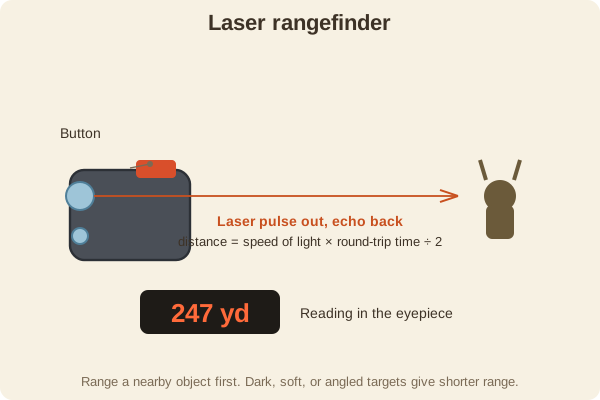
A handheld device that measures the distance to a target with a laser. It helps you decide whether a shot is within your range.
- Type
- Tools & Accessories
- Typical range
- Often 800 to 1,600+ yards on reflective targets; much less on deer or brush
- Accuracy
- Usually within about a yard at normal hunting distances
- Extras
- Angle compensation, scan mode, and ballistic calculators on some models
- Used for
- Hunting, Target shooting
Safety: Consumer rangefinders use low-power lasers, but never aim one at a person's eyes or at aircraft, and never look at the Sun through it.
What it is good for
- Judging long shots in the field.
- Bowhunters, who need exact distance for pins.
- Knowing the distance to a landmark.
Where it falls short
- Range drops on dark, soft, or angled targets such as deer in brush.
- Rain, fog, and bright sun can shorten the range.
- Does not tell you whether a shot is ethical.
Tips
- Range a nearby object, such as a rock or tree, before game appears.
- Use angle compensation for steep shots.
Works well with
- MOA and MIL: turn distance into a hold or adjustment.
- Roof Prism Binoculars: some binoculars include a built-in rangefinder.
Field notes
Know the distance before you shoot, but remember the animal, the background, and your skill decide whether you should.
Related guides
Specs here are typical, not guarantees; models differ, so check the maker's published numbers. Never look at the Sun through any optic without a certified solar filter, and zero or mount a scope with the firearm unloaded and pointed in a safe direction. Rules on optics, such as scopes on certain hunts or lasers and electronics, differ by state; our state resources directory links to each state's official regulations. Want a buying guide? Read Choosing Hunting Optics.