
Longnose Gar
Lepisosteus osseus
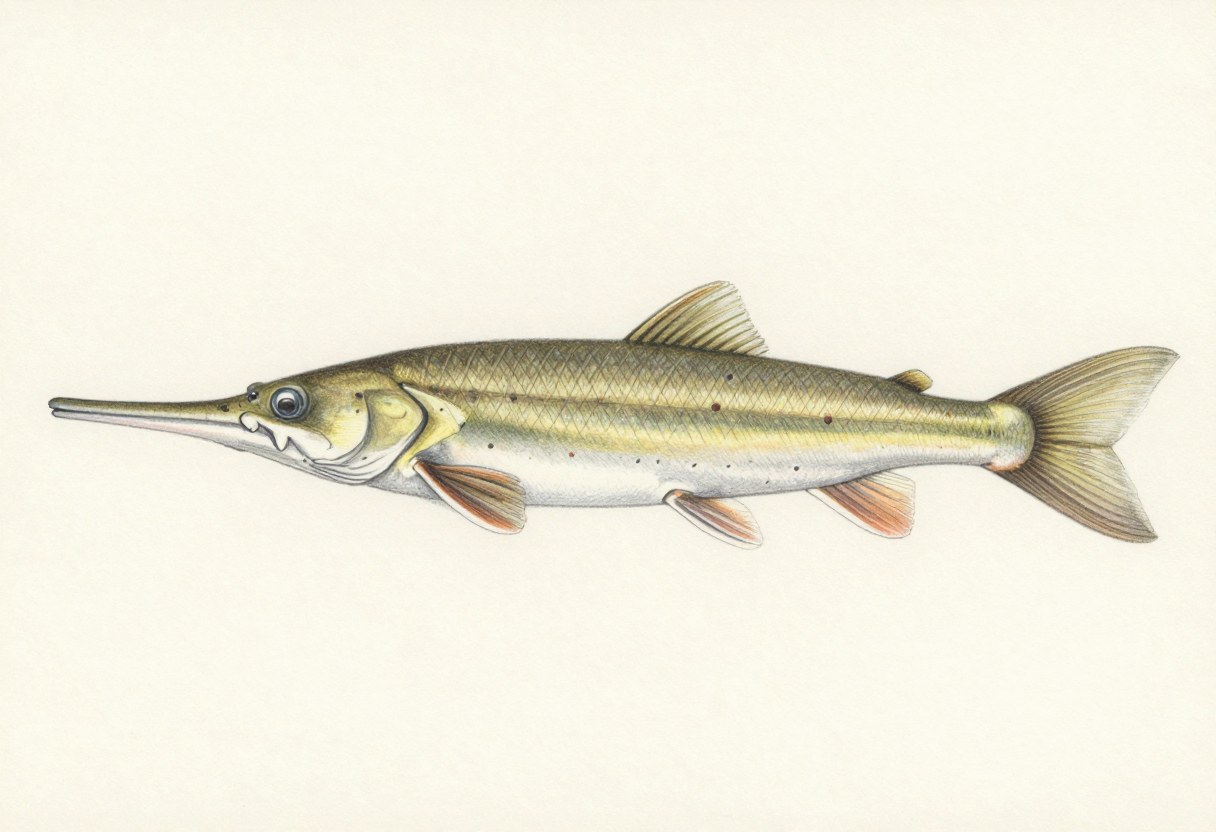
A primitive, torpedo-shaped fish with a long, toothy snout, an ambush predator of slow rivers and backwaters.
- Type
- Other
- Water
- Warm water
- Habitat
- Rivers, Lakes, Reservoirs
- Typical size
- 2 to 4 feet
- Range
- Native to the central and eastern US and southern Canada, from the Great Lakes through the Mississippi basin to the Gulf Coast.
- Best seasons
- Warm months, when fish are near the surface
How to identify it
- The snout is very long and narrow, lined with sharp teeth.
- The body is long and cylindrical, covered in hard, diamond-shaped scales.
- Small dark spots dot the fins, and the tail is broad and fan-shaped.
- The dorsal fin is set far back near the tail.
Often confused with
- Alligator Gar: a much broader, shorter snout and a far larger size.
- Spotted Gar: a shorter snout and dark spots on the head, body, and fins.
Best baits and lures
- Rope lures (frayed nylon rope with no hook)
- Live or dead shad and minnows
- Cut bait
- Large flies
Techniques
- Sight-cast to gar basking near the surface
- Use a frayed rope lure that tangles in the teeth
- Float a live or dead baitfish near a gar
- Use steel leaders for baited rigs
Fishing notes
Gar are survivors from a very ancient lineage, and they can gulp air at the surface, which lets them live in warm, low-oxygen water. Their hard scales and toothy jaws make them tricky to hook with ordinary lures.
A frayed rope lure, which has no hook, snags in a gar's teeth, letting you fight and land the fish; it is the standard technique.
The eggs of gar are toxic to people and should never be eaten. Handle gar carefully, since the teeth are sharp, and check your local rules.
Related guides
Size limits, bag limits, legal baits, and seasons vary by state and waterbody and change over time. Check your state's current regulations — our state resources directory links straight to each state's official fishing rules and license portal.