
Lynx
The Lynx
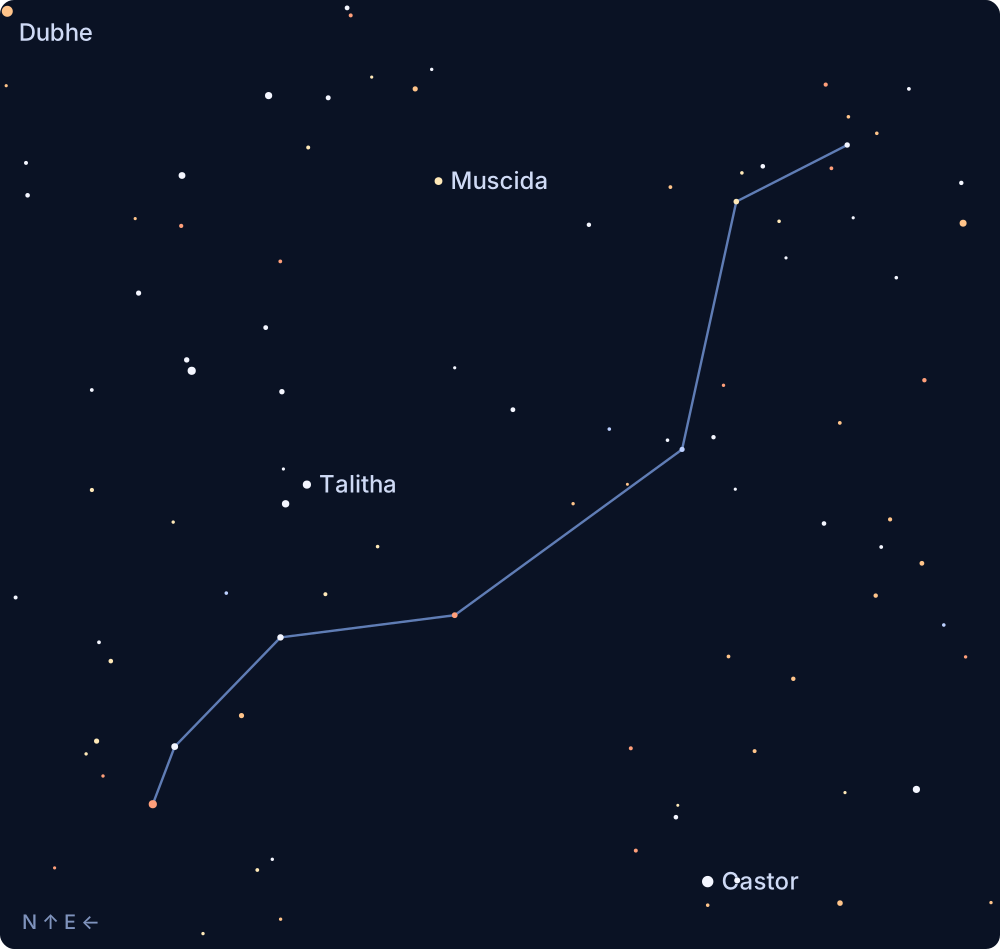
A faint, zigzagging constellation between Auriga, Gemini, and Ursa Major, named because you would supposedly need the eyes of a lynx to see it.
- Best season
- Winter
- Best months
- January through April, high in the sky on winter and early spring evenings
- Visibility
- Visible from everywhere in the United States, but too faint for towns
- Abbreviation
- Lyn
How to find it
- Look between Ursa Major's feet and the twin stars of Gemini for a zigzag of faint stars.
- Alpha Lyncis, an orange star, is at the end of the zigzag, near Cancer.
Brightest stars
- Alpha Lyncis (an orange giant)
What to look for
- The zigzag of faint stars, which needs a dark sky.
Using it to find other things
- Lynx lies between Auriga and Gemini on one side and Ursa Major on the other.
About this constellation
Lynx is a faint constellation that was named in the 1600s by the astronomer Johannes Hevelius, who joked that you would need the eyes of a lynx to see it.
On a dark night, the zigzag is easy to make out between the Big Dipper's feet and the twins of Gemini.
Related guides
Visibility depends on your latitude, the date, and the time of night. The months above assume a typical evening from the contiguous United States, so use a planetarium app to confirm what is up tonight. Never look at the Sun through binoculars or a telescope without a proper solar filter.
Star positions: Hipparcos and Bright Star catalogues via d3-celestial (BSD-3-Clause, © 2015 Olaf Frohn).