
Lacerta
The Lizard
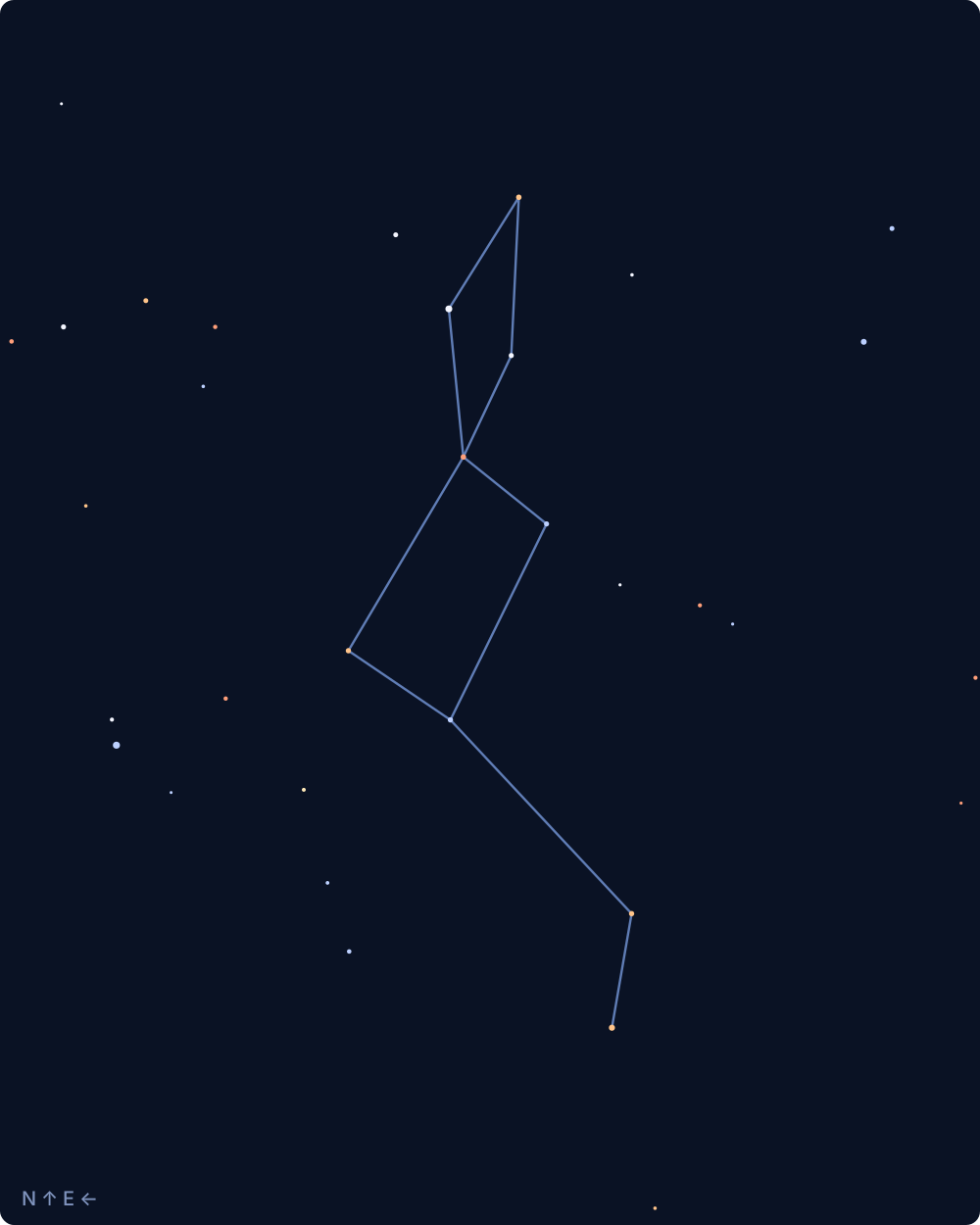
A small, faint zigzag of stars between Cygnus and Andromeda, sometimes called Little Cassiopeia because it looks like a dim copy of her W.
- Best season
- Autumn
- Best months
- August through November, high overhead on late summer and autumn evenings
- Visibility
- Visible from everywhere in the United States, best from dark sites
- Abbreviation
- Lac
How to find it
- Look between Cygnus and Cassiopeia for a small zigzag of faint stars.
- It looks like a smaller, dimmer W.
Brightest stars
- Alpha Lacertae (a modestly bright white star)
What to look for
- The zigzag: it takes a dark sky to see it clearly.
Using it to find other things
- Lacerta lies between Cygnus, Cepheus, Cassiopeia, and Andromeda.
About this constellation
Lacerta has no bright stars, so it is easy to overlook. Its zigzag shape is a fun challenge for dark nights, especially if you are already looking at the Milky Way between Cygnus and Cassiopeia.
Related guides
Visibility depends on your latitude, the date, and the time of night. The months above assume a typical evening from the contiguous United States, so use a planetarium app to confirm what is up tonight. Never look at the Sun through binoculars or a telescope without a proper solar filter.
Star positions: Hipparcos and Bright Star catalogues via d3-celestial (BSD-3-Clause, © 2015 Olaf Frohn).