
Grus
The Crane
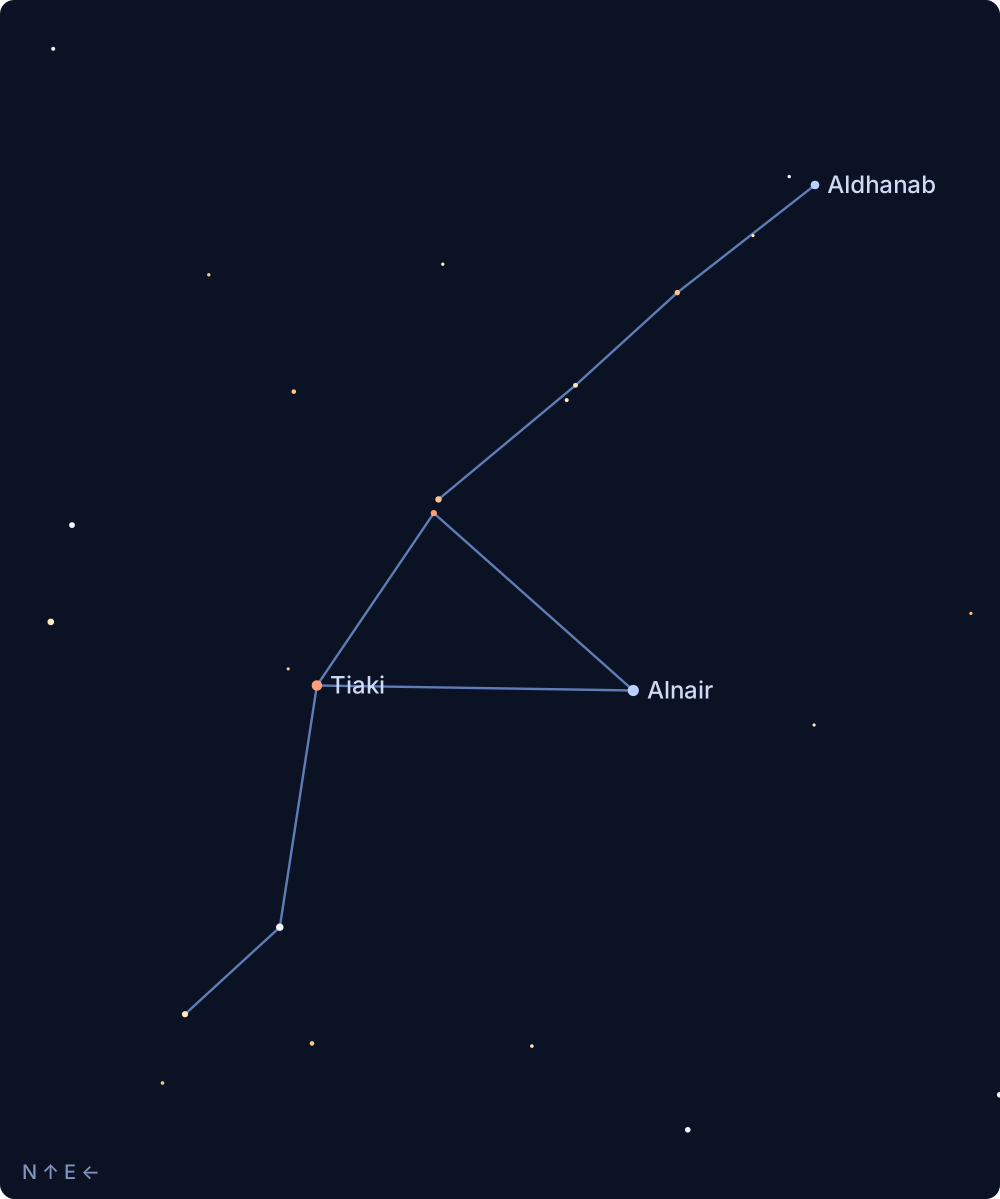
A southern constellation shaped like a long-necked bird, south of Piscis Austrinus, visible low in the south from the southern United States.
- Best season
- Autumn
- Best months
- September through November, very low in the south on autumn evenings
- Visibility
- Visible low in the south from the southern half of the United States
- Abbreviation
- Gru
How to find it
- Find Fomalhaut, then look below it for Alnair, the bright star of Grus.
- From there, a line of stars runs up to the crane's long neck and head.
Brightest stars
- Alnair (the brightest star, the crane's body)
- Tiaki (an orange giant)
What to look for
- Alnair, a bright star low in the south from the southern states.
Using it to find other things
- Grus lies south of Fomalhaut and Piscis Austrinus.
About this constellation
Grus is a southern constellation that is visible from the United States only low in the south. Alnair, its brightest star, is much easier to see from the far southern states.
It was added to star charts by Dutch navigators in the 1500s, along with several other southern birds.
Related guides
Visibility depends on your latitude, the date, and the time of night. The months above assume a typical evening from the contiguous United States, so use a planetarium app to confirm what is up tonight. Never look at the Sun through binoculars or a telescope without a proper solar filter.
Star positions: Hipparcos and Bright Star catalogues via d3-celestial (BSD-3-Clause, © 2015 Olaf Frohn).