
Field Guide / Clouds & Weather Signs
Shelf Cloud
arcus cloud
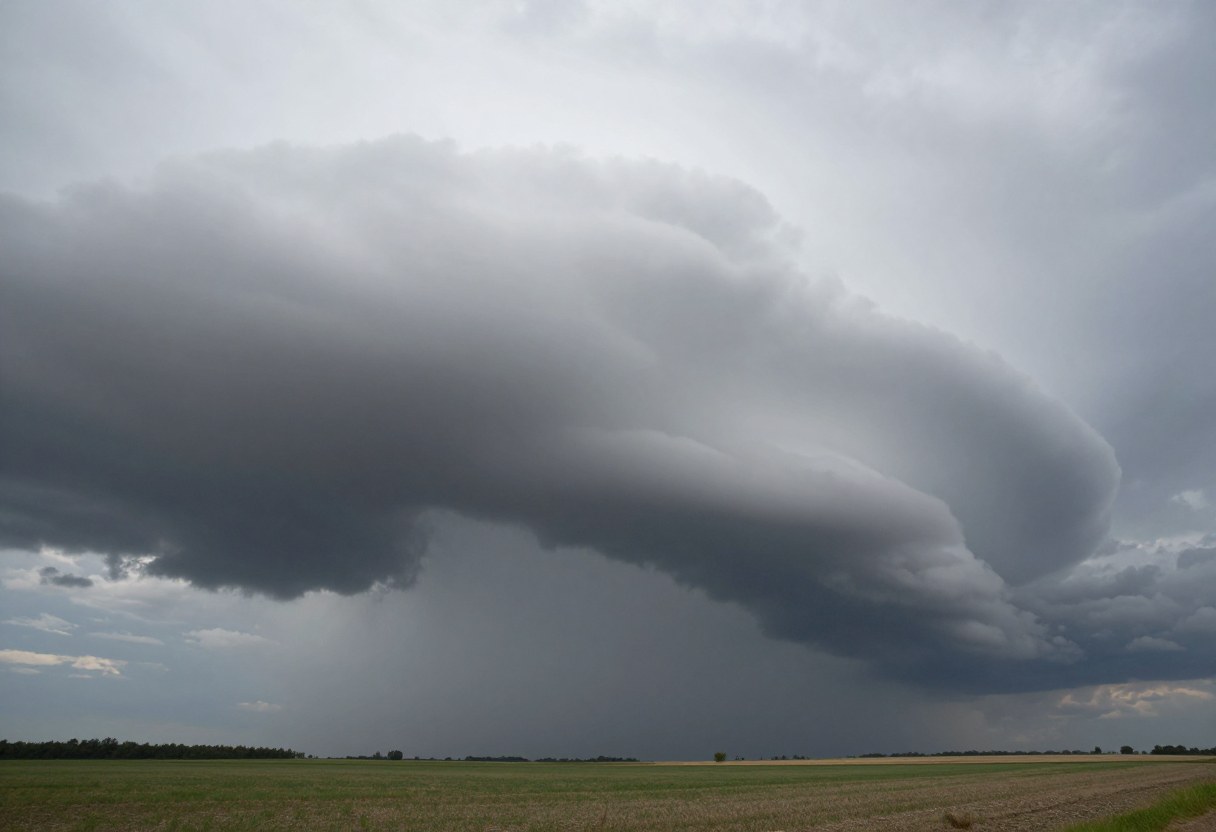
A low, wedge-shaped cloud along the leading edge of a thunderstorm. It marks the gust front, where strong winds and heavy rain arrive suddenly.
- Height
- Special & Ground-Level
- Abbreviation
- arcus
- Typical altitude
- Low, near the base of a thunderstorm
- Usually means
- Storms possible
Safety: There is no safe place outdoors when a thunderstorm is nearby. If you can hear thunder, go to a substantial building or a hard-topped vehicle with the windows up, and wait 30 minutes after the last thunder before you go out again. Tents, open fields, ridgelines, open water, and isolated trees are not safe places to be.
How to recognize it
- A low, dark, horizontal wedge or shelf with a smooth or layered underside.
- It lies at the front edge of a thunderstorm, with darkness behind it.
- Often accompanied by a sudden cool breeze.
What it usually means
- Strong winds, sometimes damaging, arrive right under or behind the shelf cloud.
- Heavy rain and often hail follow shortly after.
- The temperature may fall quickly.
What to do outdoors
- Take shelter immediately: there may be only a few minutes before the wind arrives.
- Secure or lower your tent and avoid camping near large trees or dead limbs.
- Get off the water and away from open ground.
Often confused with
- Wall cloud: a lowered block of cloud under a thunderstorm's rain-free base that can mean rotation. If you see one, take shelter and follow weather alerts.
Field notes
A shelf cloud looks dramatic, and the wind that comes with it can be violent. Straight-line winds can topple trees and flip tents.
If you see one approaching, leave your view of it for later and move to shelter.
Related guides
Cloud signs are rough guides, not forecasts. Always check the National Weather Service forecast at weather.gov before and during a trip, carry a way to receive alerts, and treat any watch or warning as a reason to change your plans. If you can hear thunder, you are close enough to be struck by lightning.