
Wood Duck
Aix sponsa
One of the most colorful ducks in North America, a crested bird of wooded swamps, beaver ponds, and slow rivers that nests in tree cavities.
- Type
- Ducks
- Movement
- Migratory and resident
- Habitat
- Marshes, Rivers, Woodlands
- Typical size
- 17–20 in long; about 1–1.5 lb
- Range
- Breeds in wooded wetlands across the eastern half of the country and along the Pacific coast; northern birds migrate south for winter
- Seasons
- Included in the regular duck season in most states, with its own daily bag limit
How to identify it
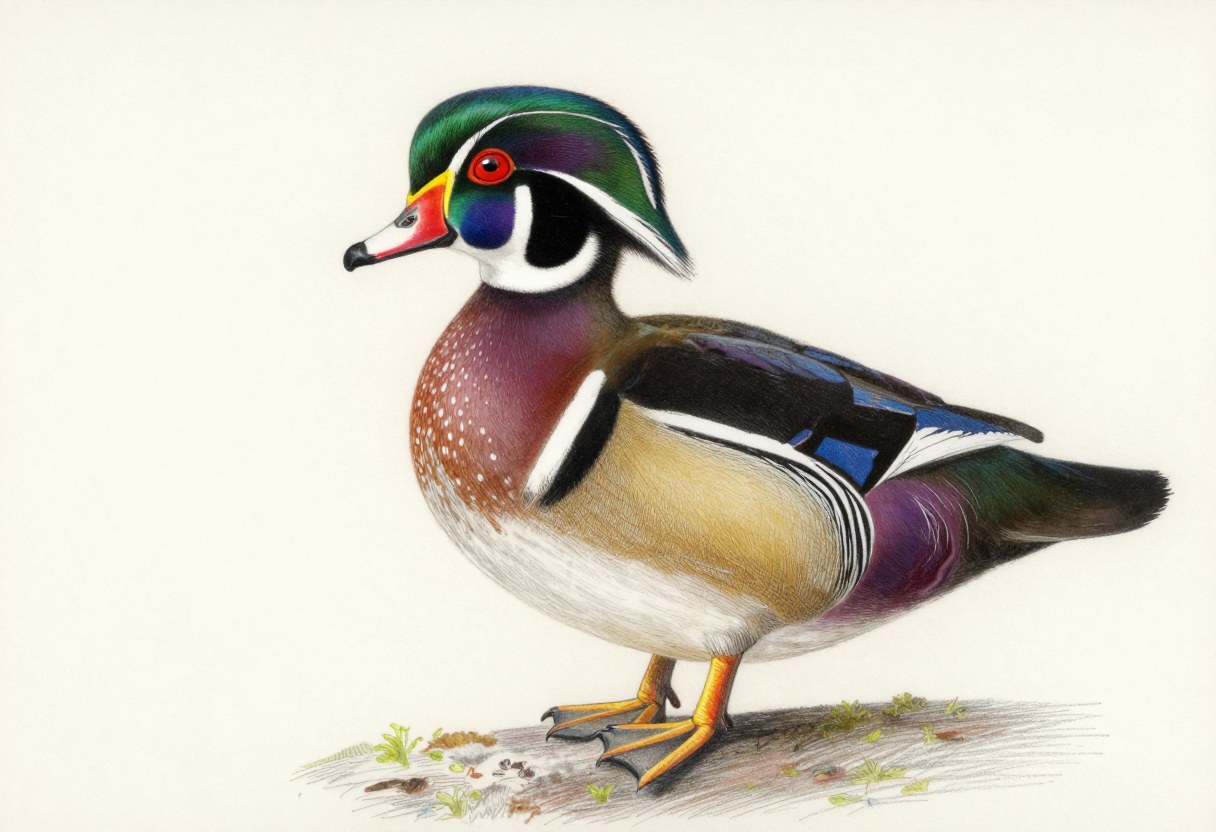
- Drake: a glossy green and purple head with a swept-back crest and bold white stripes, a red eye, a red bill with a yellow and black tip, and a chestnut breast flecked with white.
- Hen: gray-brown with a white teardrop-shaped patch around the eye and a white throat.
- Both sexes have a squared-off tail and a big head with a crest, and they fly fast and low through trees.
- Hens give a rising, squealing call when flushed.
Often confused with
- Hooded merganser: a smaller diving duck with a thin bill and a fan-shaped white crest on a dark head.
What it eats
- Acorns and other nuts in flooded timber
- Seeds and aquatic plants
- Insects and other invertebrates
How it's hunted
- Jump-shooting wooded creeks and beaver ponds
- Small decoy spreads in flooded timber or at pond edges
- Watching roosts and feeding areas at first light, when woodies fly early
Field notes
Wood ducks are birds of the woods more than the open water. They nest in tree cavities and nest boxes, and they feed on acorns beneath oaks in flooded bottomlands.
They flush early and fast, so success usually depends on being in place before first light. Learning the drake's pattern and the hen's white eye patch makes quick identification much easier.
Related guides
Seasons, bag limits, legal shot types, and licensing vary by state and change every year. Migratory game birds such as ducks, geese, and doves generally require a state license, registration in the Harvest Information Program, and, for waterfowl, a federal duck stamp, and waterfowl must be hunted with non-toxic shot. Check your state's current regulations — our state resources directory links straight to each state's official hunting rules and license portal.