
Wild Turkey
Meleagris gallopavo
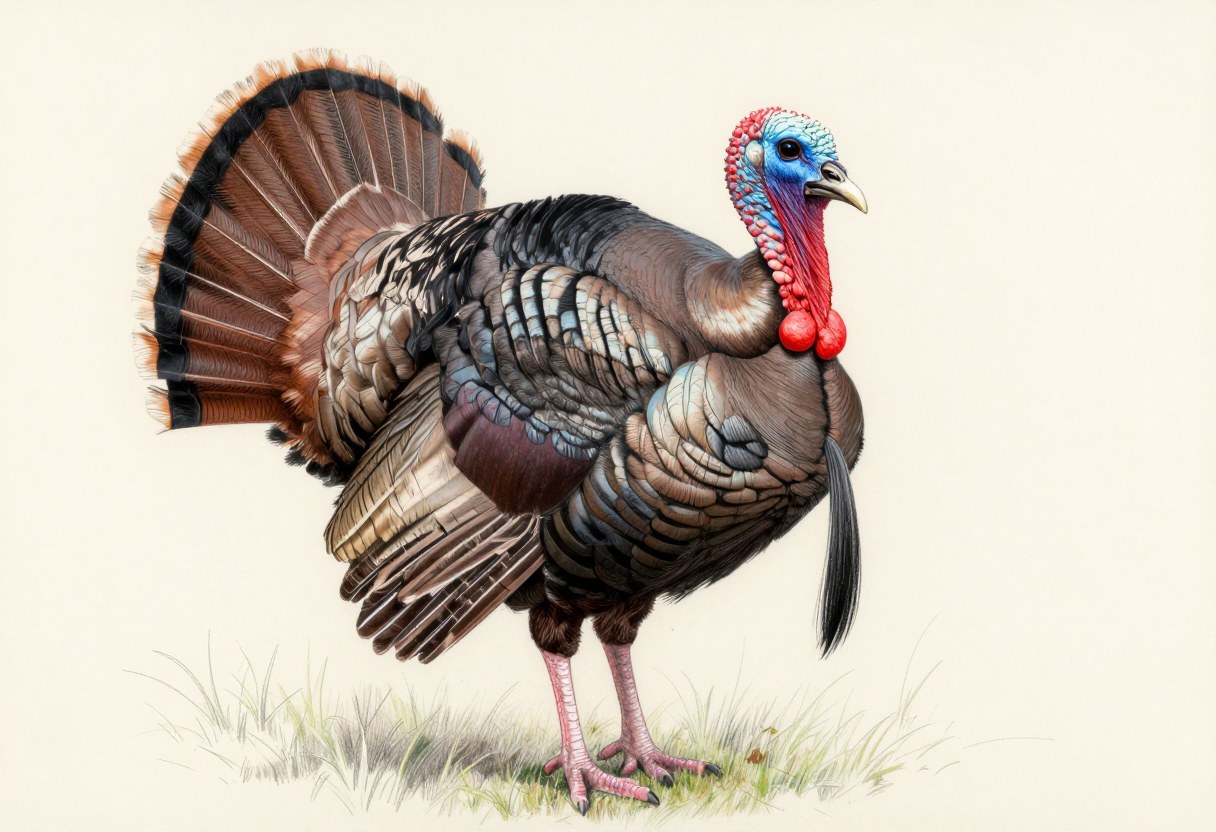
North America's largest upland game bird. Toms have a bare red and blue head, a dark bronze body, and a beard of bristles hanging from the chest.
- Type
- Turkey
- Movement
- Year-round resident
- Habitat
- Woodlands, Farm fields
- Typical size
- Toms about 16–24 lb; hens about 8–12 lb
- Range
- Found in nearly every state, with the highest numbers in the East, Midwest, and South
- Seasons
- Spring gobbler seasons, generally March through May, are the main hunt; many states also hold a fall season
How to identify it
- Tom: bare head and neck that shifts from red to white to blue, red wattles, a long beard hanging from the chest, and dark bronze body feathers with black tips.
- Hen: smaller and duller, with a smaller, bluish-gray head. A minority of hens also carry a beard.
- Jakes, which are young males, have a short beard and a fan that is uneven, with the center tail feathers sticking up above the others.
- Spurs on the back of the legs are longer and sharper on older males.
Often confused with
- Domestic turkey: farm and feral birds are often heavier, shorter-legged, and sometimes white or mottled, with less metallic color.
What it eats
- Acorns and other nuts
- Seeds, berries, and waste grain
- Insects, especially for young poults in summer
How it's hunted
- Calling in spring with yelps, clucks, and purrs, after locating birds at dawn with a locator call
- Decoys and ground blinds near strutting areas
- Scouting roost trees, feeding fields, and travel routes before the season
Field notes
Wild turkeys were nearly wiped out in the early 1900s and have recovered to become one of the great conservation stories in North America. They are now hunted in almost every state.
Spring is the most popular season because toms gobble and respond to calls. Many states limit the spring hunt to gobblers or bearded birds, so a clear look at the beard matters.
Related guides
Seasons, bag limits, legal shot types, and licensing vary by state and change every year. Migratory game birds such as ducks, geese, and doves generally require a state license, registration in the Harvest Information Program, and, for waterfowl, a federal duck stamp, and waterfowl must be hunted with non-toxic shot. Check your state's current regulations — our state resources directory links straight to each state's official hunting rules and license portal.