
Snow Goose
Anser caerulescens
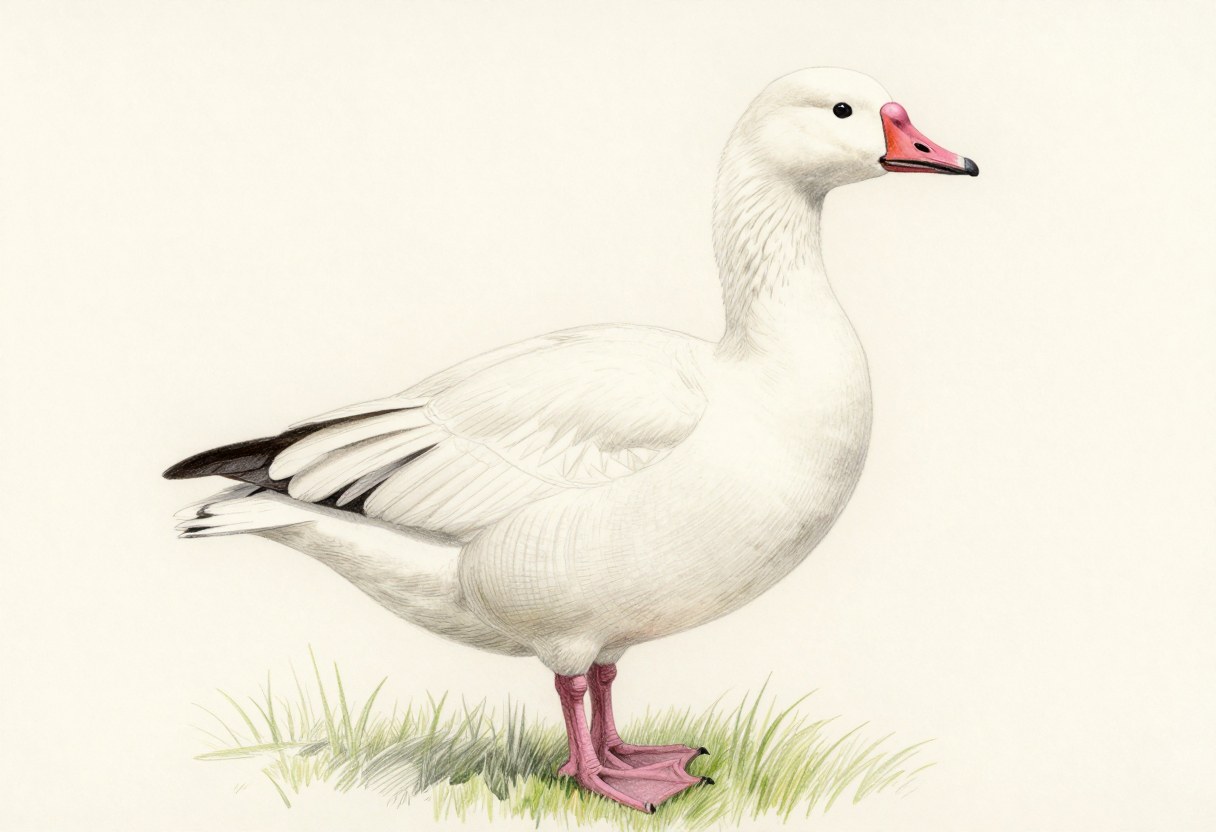
A white goose with black wingtips that travels in huge flocks. Snow geese are so abundant that many states offer special extended seasons.
- Type
- Geese
- Movement
- Migratory
- Habitat
- Farm fields, Marshes, Lakes & ponds
- Typical size
- 25–33 in long; about 5–7 lb
- Range
- Breeds on the Arctic tundra and winters across the Gulf Coast, the central states, and the West Coast
- Seasons
- Regular fall seasons, plus special spring conservation-order seasons in many central states, with rules that differ from the regular season
How to identify it
- White morph: pure white body, black wingtips, a pink bill with a black "grin patch" along the edge, and pink legs.
- Blue morph: a dark gray-brown body with a white head and neck.
- Juveniles are grayish, with dark bills and legs.
- Flocks look like blowing snow and can number in the thousands.
Often confused with
- Ross's goose: a smaller, white goose with a short, stubby bill and no black grin patch.
What it eats
- Waste grain in harvested fields
- Roots and shoots of marsh plants
- Grasses and winter wheat
How it's hunted
- Very large decoy spreads in harvested grain fields
- Scouting feeding fields and roosts
- Hunting during conservation-order seasons, when some rules differ from the regular season
Field notes
Snow goose numbers have grown so large that wildlife managers use special spring seasons, called conservation-order seasons, to reduce the pressure on Arctic nesting grounds. The rules for those seasons differ from the regular season, so check your state's current regulations.
Flocks are wary and often feed in huge groups. Hunters use large decoy spreads and move to where the birds are feeding that day.
Related guides
Seasons, bag limits, legal shot types, and licensing vary by state and change every year. Migratory game birds such as ducks, geese, and doves generally require a state license, registration in the Harvest Information Program, and, for waterfowl, a federal duck stamp, and waterfowl must be hunted with non-toxic shot. Check your state's current regulations — our state resources directory links straight to each state's official hunting rules and license portal.