
Sharp-tailed Grouse
Tympanuchus phasianellus
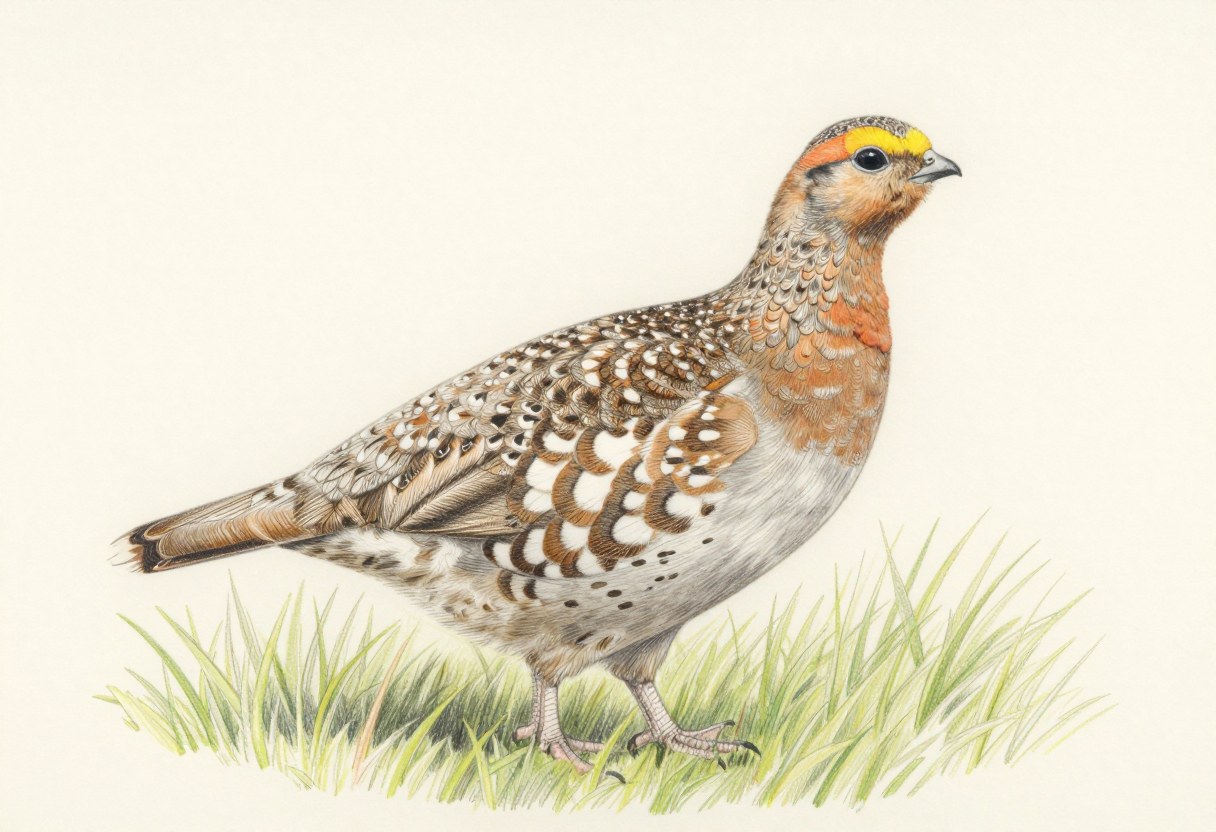
A prairie grouse of the northern plains, buff and brown with a short, pointed tail that flashes white in flight.
- Type
- Upland Birds
- Movement
- Year-round resident
- Habitat
- Prairie & grassland, Brushland, Farm fields
- Typical size
- 15–20 in long; about 2 lb
- Range
- Found across the northern Great Plains, the northern Rockies, and the northern Great Lakes states, and across Canada and Alaska
- Seasons
- Seasons usually open in the fall and run into winter, with a small daily bag limit
How to identify it
- A buff and brown body with white spots on the back and wings.
- V-shaped marks on the breast and flanks, and a pale belly.
- A short, pointed tail with white outer feathers that flash in flight.
- In spring, males dance on traditional display grounds.
Often confused with
- Greater prairie-chicken: darker, with strong barring on the underparts and a short, rounded dark tail.
What it eats
- Seeds and waste grain
- Buds, leaves, and berries
- Insects, especially in summer
How it's hunted
- Walking grass and brush edges with a pointing dog
- Hunting shelterbelts and brushy draws near grassland
- Long walks, as late-season birds often flush at a distance
Field notes
Sharp-tailed grouse live in open grassland mixed with brush, and they move between cover types through the year. Late in the season, they gather in larger flocks that can be hard to approach.
The white outer tail feathers are a quick way to confirm the species when a bird flushes.
Related guides
Seasons, bag limits, legal shot types, and licensing vary by state and change every year. Migratory game birds such as ducks, geese, and doves generally require a state license, registration in the Harvest Information Program, and, for waterfowl, a federal duck stamp, and waterfowl must be hunted with non-toxic shot. Check your state's current regulations — our state resources directory links straight to each state's official hunting rules and license portal.