
Northern Bobwhite
Colinus virginianus
A small, plump quail named for its whistled call, a favorite of bird-dog hunters in the South and Midwest.
- Type
- Upland Birds
- Movement
- Year-round resident
- Habitat
- Farm fields, Brushland, Prairie & grassland
- Typical size
- 8–11 in long; about 6 oz
- Range
- Found across the eastern and southern United States and into the southern Great Plains
- Seasons
- Seasons usually run from late fall into winter, with a daily bag limit that varies by state
How to identify it
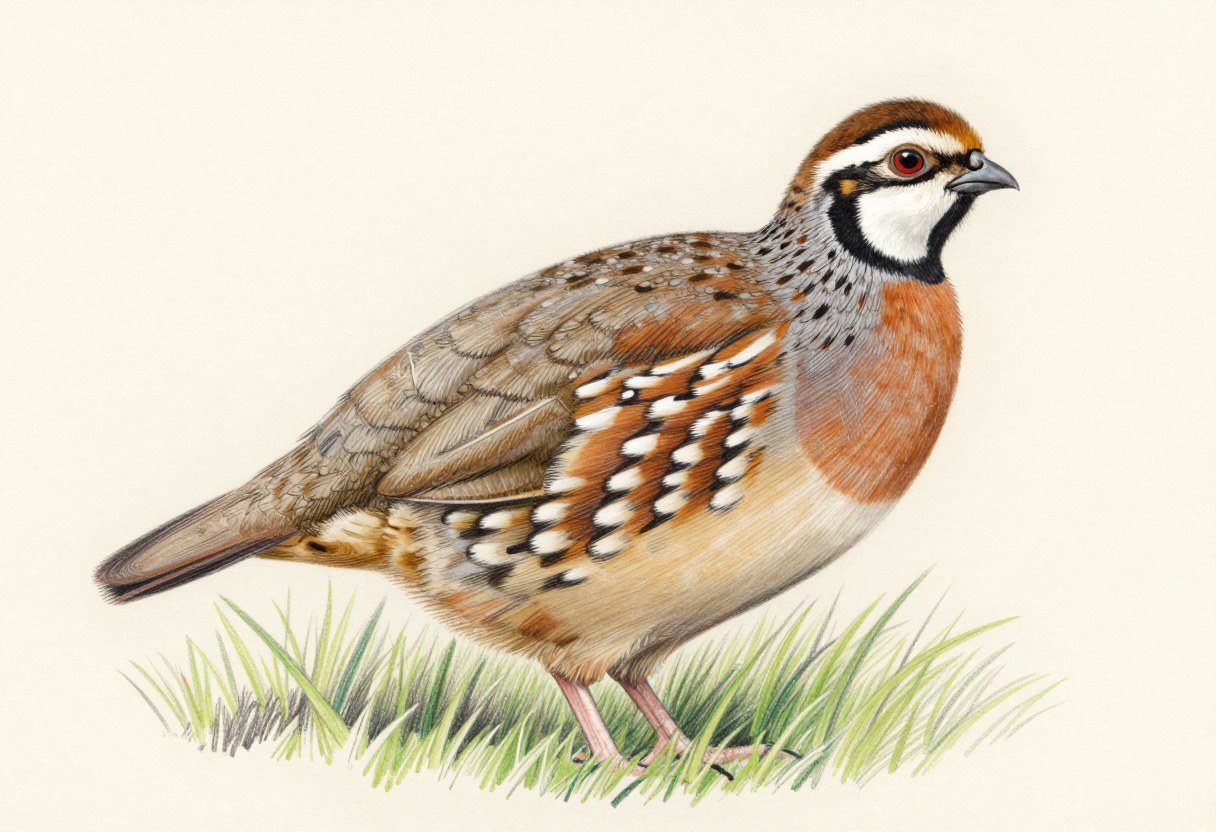
- Male: a white throat and a bold white stripe over the eye on a dark head, with a rusty-brown body streaked with white on the flanks.
- Female: a buff throat and eye stripe instead of white.
- Small, round, and short-tailed, they flush from the ground in a covey and scatter.
Often confused with
- Scaled quail: a southwestern quail with a scaly gray breast and a white-tipped crest.
What it eats
- Seeds of native plants and weeds
- Waste grain such as corn and sorghum
- Insects, especially for chicks
How it's hunted
- Pointing dogs working field edges and brush
- Walking up coveys in grass and brush
- Short-range shots at flushing birds
Field notes
Bobwhites travel in coveys of a dozen or so birds and roost in a tight circle at night. A good covey rise is one of the great sights in upland hunting.
Numbers have declined in many areas because of habitat loss, so hunters and landowners often work together to keep good cover.
Related guides
Seasons, bag limits, legal shot types, and licensing vary by state and change every year. Migratory game birds such as ducks, geese, and doves generally require a state license, registration in the Harvest Information Program, and, for waterfowl, a federal duck stamp, and waterfowl must be hunted with non-toxic shot. Check your state's current regulations — our state resources directory links straight to each state's official hunting rules and license portal.