
Greater White-fronted Goose
Anser albifrons
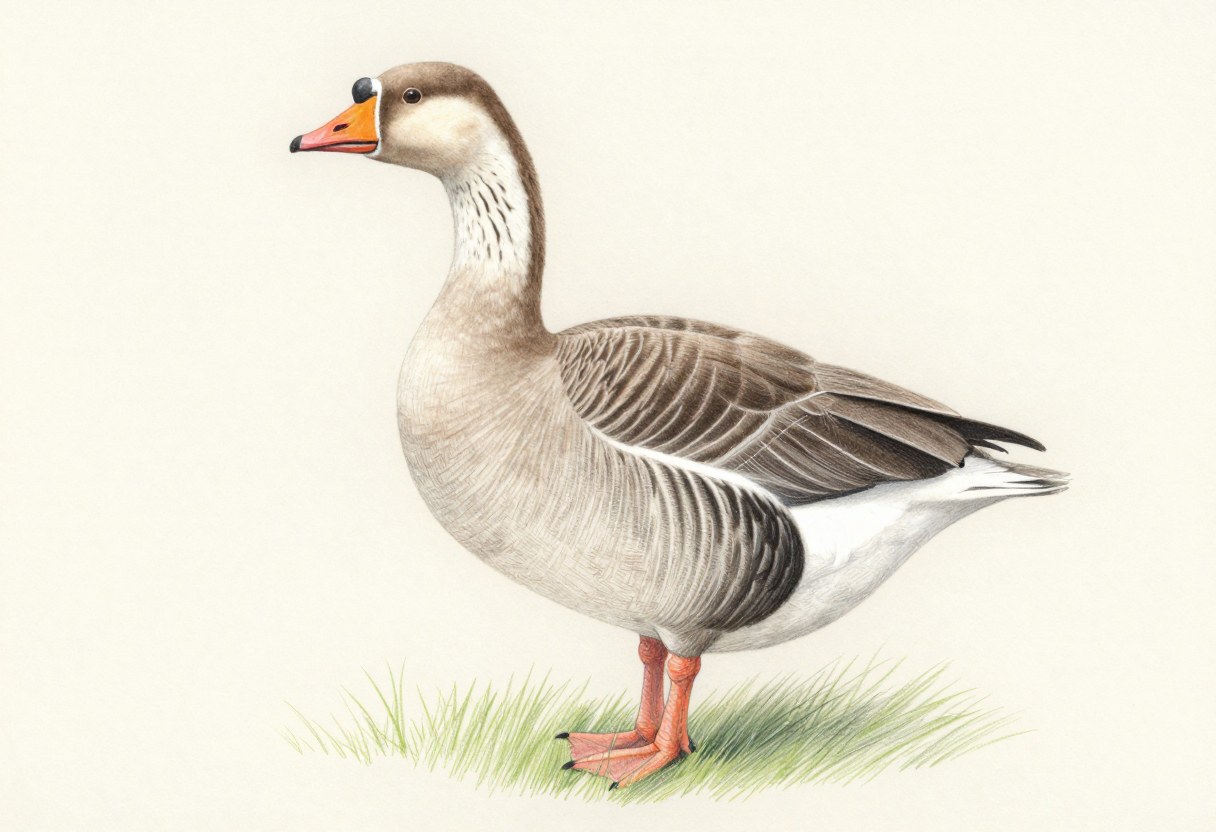
A gray-brown goose with a white patch at the base of its bill and dark bars on its belly, nicknamed the specklebelly.
- Type
- Geese
- Movement
- Migratory
- Habitat
- Farm fields, Marshes, Lakes & ponds
- Typical size
- 27–34 in long; about 5–7 lb
- Range
- Breeds on the Arctic tundra of Alaska and Canada and winters across the Gulf Coast, the central states, and California
- Seasons
- Part of the regular goose season, often with a separate daily bag limit from Canada geese
How to identify it
- Adult: a gray-brown body, a pink or orange bill with a white patch around its base, irregular black bars across the belly, and orange legs.
- Juvenile: no white face patch and no belly bars, but the bill and legs are pink or orange.
- Their call is a high, laughing, repeated sound that gives them the nickname "specks."
What it eats
- Waste corn, rice, and wheat in harvested fields
- Grasses and sedges
- Aquatic plants
How it's hunted
- Decoy spreads in harvested grain fields
- Calling with a high, laughing call
- Hunting near roosts and the fields where they feed
Field notes
White-fronted geese are prized by many goose hunters for their looks and their lively calls. They often travel in family groups and mix with other geese in large fields.
The belly bars and the white face of the adult are the key identification marks. Juveniles look more plain, so rely on the bill and leg color.
Related guides
Seasons, bag limits, legal shot types, and licensing vary by state and change every year. Migratory game birds such as ducks, geese, and doves generally require a state license, registration in the Harvest Information Program, and, for waterfowl, a federal duck stamp, and waterfowl must be hunted with non-toxic shot. Check your state's current regulations — our state resources directory links straight to each state's official hunting rules and license portal.