
Gambel's Quail
Callipepla gambelii
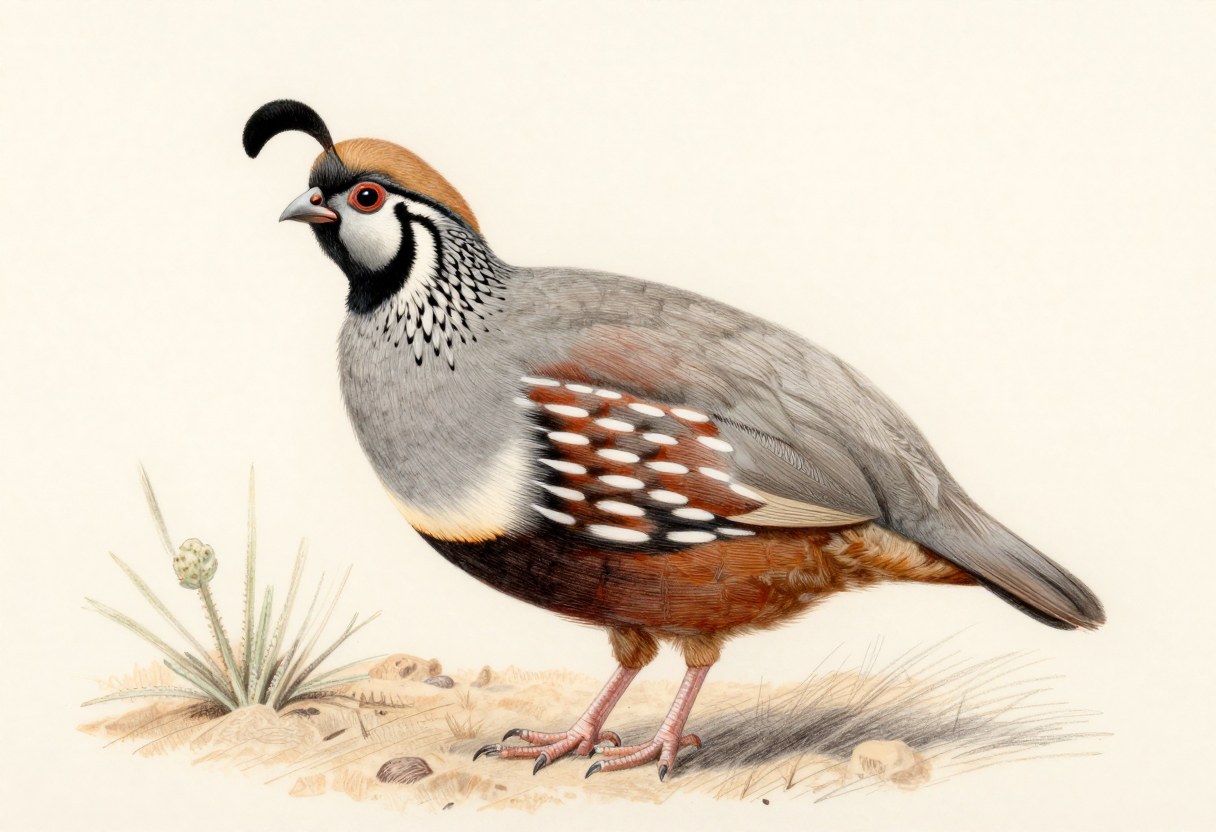
A desert quail with a curved black head plume, common in the Southwest around washes and mesquite.
- Type
- Upland Birds
- Movement
- Year-round resident
- Habitat
- Brushland
- Typical size
- 9–11 in long; about 6 oz
- Range
- Found in the deserts of Arizona, southern Nevada and Utah, southeastern California, New Mexico, and west Texas
- Seasons
- Seasons usually run from fall into winter, with a daily bag limit that varies by state
How to identify it
- Male: a curved black teardrop plume on the forehead, a black face outlined in white, a chestnut cap, a gray breast, a black belly patch, and rusty flanks with white streaks.
- Female: duller, with a plume but without the black face.
- Coveys run through brush and often flush only when pressed.
Often confused with
- California quail: has a scaly pattern on the belly and no black belly patch.
What it eats
- Seeds of desert plants
- Leaves and shoots
- Insects
How it's hunted
- Walking desert washes and brushy flats
- Using a dog to find birds that run before they flush
- Hunting in the cooler parts of the day, and watching for snakes and heat
Field notes
Gambel's quail are birds of the Southwest, where they live around desert washes, mesquite, and brush. They run a lot, so hunting them takes patience and good legs.
Heat and rattlesnakes are real concerns in their habitat, so plan hunts for cooler hours and watch where you step.
Related guides
Seasons, bag limits, legal shot types, and licensing vary by state and change every year. Migratory game birds such as ducks, geese, and doves generally require a state license, registration in the Harvest Information Program, and, for waterfowl, a federal duck stamp, and waterfowl must be hunted with non-toxic shot. Check your state's current regulations — our state resources directory links straight to each state's official hunting rules and license portal.