
Canvasback
Aythya valisineria
A big, long-billed diving duck with a sloping profile and a white back. Many hunters rank it among the most prized ducks.
- Type
- Ducks
- Movement
- Migratory
- Habitat
- Lakes & ponds, Marshes, Rivers
- Typical size
- 19–22 in long; about 2.5 lb
- Range
- Breeds in the northern prairies and Alaska and winters along the coasts and on large lakes and rivers across the country
- Seasons
- Bag limits are often low and sometimes restrictive for canvasbacks, so check the daily limit each year
How to identify it
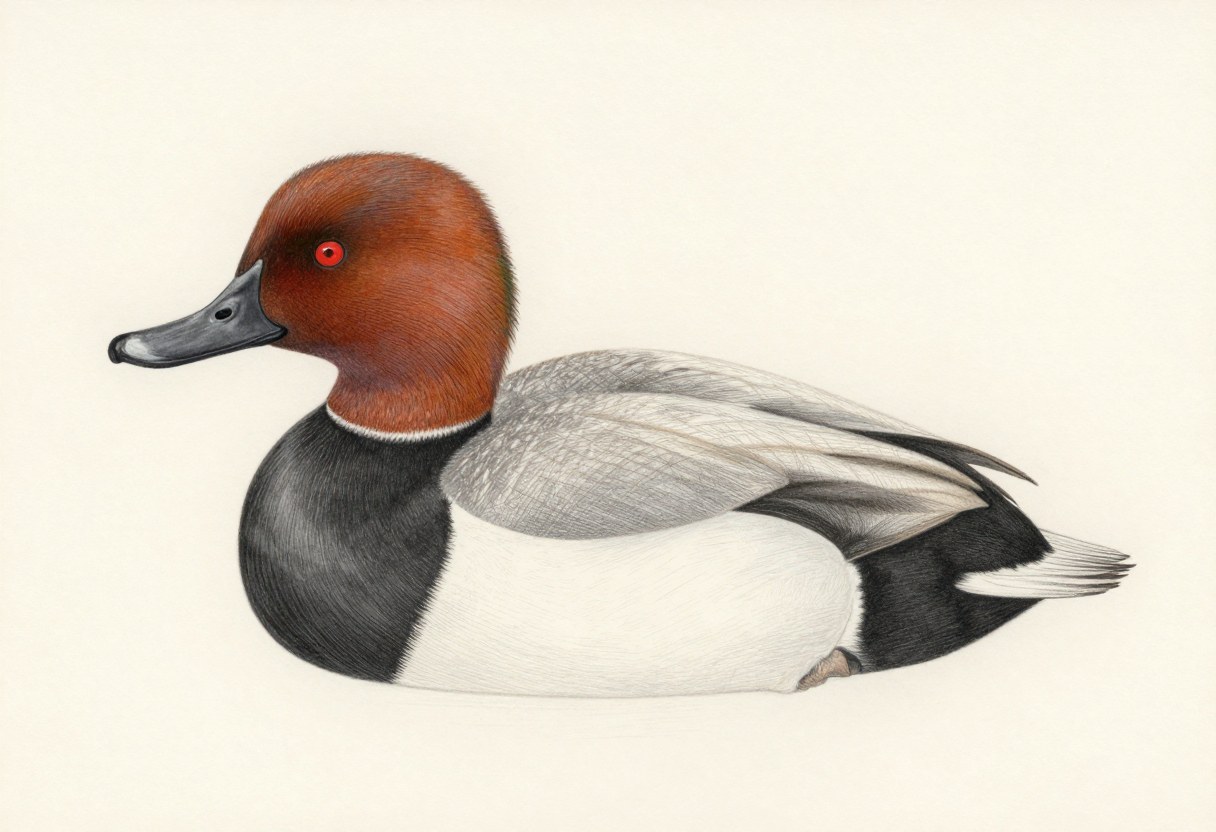
- Drake: a chestnut-red head, a black breast, a pale white-gray body, black tail, and a long, black bill that forms a continuous sloping line with the forehead.
- Hen: brown body and a paler head and neck, with the same long sloping profile.
- The sloping head and long bill are the best identification marks at a distance.
Often confused with
- Redhead: has a round head, a shorter pale blue bill with a white ring, and a gray rather than white body.
What it eats
- Tubers and roots of aquatic plants, especially wild celery
- Seeds and shoots of submerged plants
- Clams and snails
How it's hunted
- Large decoy spreads on open water
- Boat and layout blinds on large lakes and bays
- Mixing diving-duck decoys with other species
Field notes
Canvasbacks are large diving ducks that gather in big rafts on open lakes and bays. They dive for tubers, particularly wild celery, which is why some hunters rate them highly as table fare.
The sloping profile separates them from the other red-headed diving duck, the redhead, which has a rounder head.
Related guides
Seasons, bag limits, legal shot types, and licensing vary by state and change every year. Migratory game birds such as ducks, geese, and doves generally require a state license, registration in the Harvest Information Program, and, for waterfowl, a federal duck stamp, and waterfowl must be hunted with non-toxic shot. Check your state's current regulations — our state resources directory links straight to each state's official hunting rules and license portal.