
American Woodcock
Scolopax minor
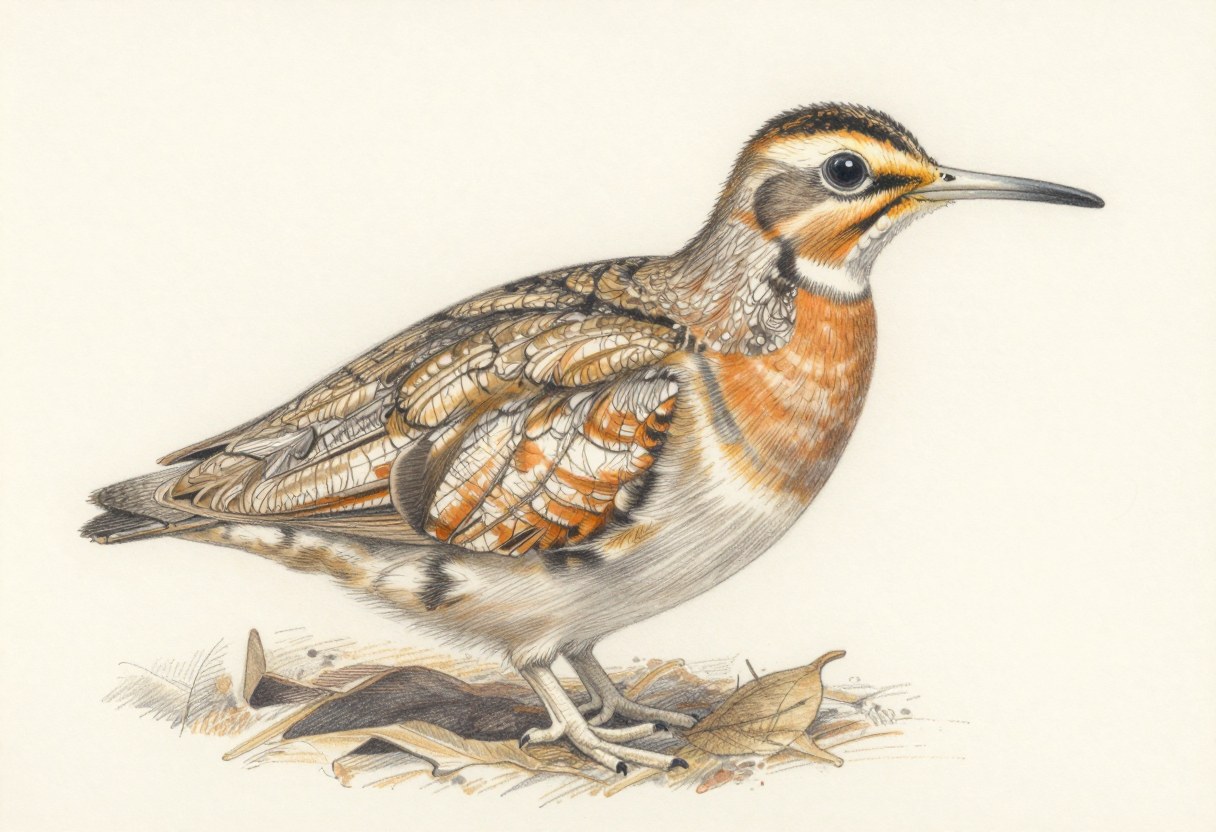
A plump woodland shorebird with a long bill and eyes set high on its head, which makes it one of the most unusual game birds.
- Type
- Other
- Movement
- Migratory
- Habitat
- Woodlands, Farm fields
- Typical size
- 10–12 in long; about 6–8 oz
- Range
- Breeds in the eastern and central United States and Canada and winters in the Southeast and along the Gulf Coast
- Seasons
- A migratory bird with a fall season that often runs from October into December, with a small daily limit
How to identify it
- A stocky, round body with a very long, straight bill about 2.5 inches.
- Large dark eyes set high and far back on the head.
- A mottled brown and gray back with buff-orange underparts, and a short tail.
- When flushed, the bird rises with a twittering sound from its wings.
Often confused with
- Wilson's snipe: slimmer, with a striped head and back, and flushes in a zigzag.
What it eats
- Earthworms, the main food
- Insect larvae and other invertebrates
- Occasionally seeds
How it's hunted
- Walking young forest, alder thickets, and moist soils with a pointing dog
- Hunting overnight flight areas after a cold front
- Short-range shots at flushing birds
Field notes
Woodcock probe soft, moist soil for earthworms, so good woodcock cover is damp, young forest with open ground underneath.
In spring, males perform a spiraling display flight called a sky dance. In fall, the birds migrate at night and hunters find them after cold fronts.
Related guides
Seasons, bag limits, legal shot types, and licensing vary by state and change every year. Migratory game birds such as ducks, geese, and doves generally require a state license, registration in the Harvest Information Program, and, for waterfowl, a federal duck stamp, and waterfowl must be hunted with non-toxic shot. Check your state's current regulations — our state resources directory links straight to each state's official hunting rules and license portal.