
How Acorns Change Where Bucks Bed and Move
Acorns are more than just snacks—they fundamentally change where bucks establish their bedding areas and how they move during the rut. We break down what this means for your plan and why reading the landscape is as important as carrying a rifle.
Written by David Rodgers — September 26, 2026
Summary: The Acorn Effect
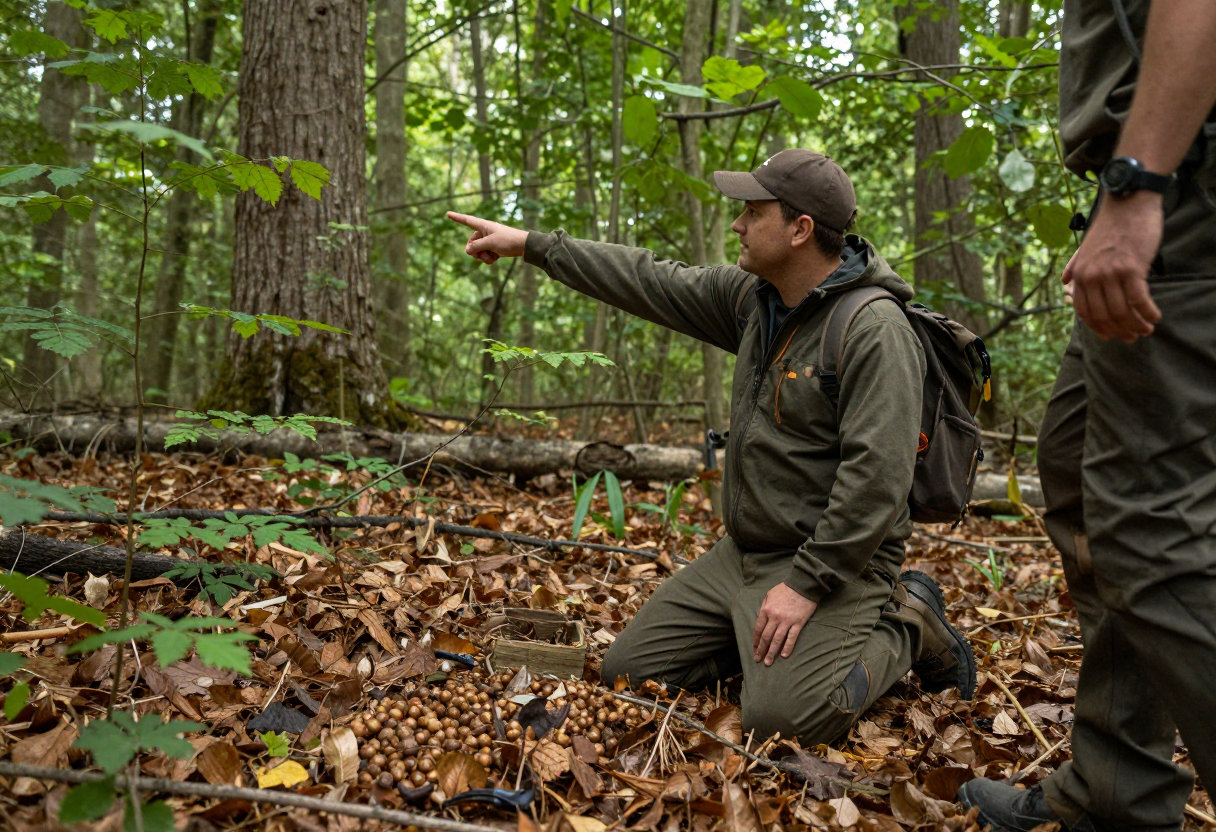
When we talk about "mast"—specifically acorns in the eastern and southern states—we aren't just talking about an extra snack for whitetails; we are talking about a primary driver of geography. In my experience, acorns act as a powerful directional attractor. They change how bucks navigate their home ranges by providing high-calorie rewards that make certain areas more "valuable" than others.
When a heavy acorn crop is present, it can override traditional movement patterns. A buck might skip a usual travel corridor because there is a concentrated source of energy nearby. Instead of wandering wide to find forage, they focus on the feast. This concentrates their activity and makes them less likely to wander into "lesser" areas during peak seasons. Understanding this shift is essential for anyone trying to predict where deer will spend their time as the season progresses.
Reading the Ground: How Food Dictates Movement
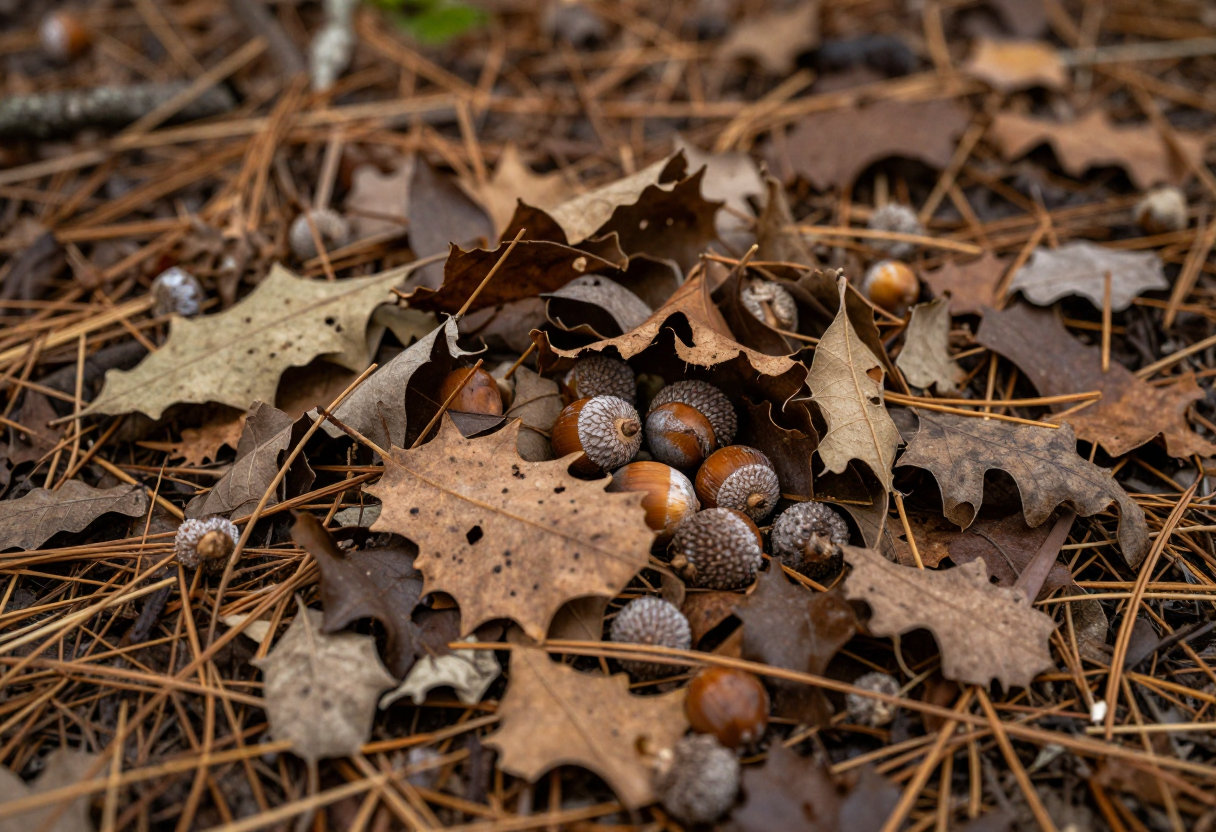
To understand why acorns change everything, you have to look at it from a biological standpoint. A buck’s primary goal—especially in the months leading up to and during the rut—is to maintain weight and energy. Acorns are incredibly calorie-dense compared to standard browse like woody plants or summer grasses.
When these high-calorie sources are abundant, they dictate the "path of least resistance" for a deer's daily travel:
- Concentration: Rather than traveling long distances across multiple habitats, bucks will center their movements around known mast stands.
- Predictable Corridors: They often develop reliable paths between high-value food sources and nearby bedding areas.
- Reduced Travel: If a buck finds a significant oak stand with heavy acorn production, he has less reason to wander into exposed areas or less desirable terrain.
In short, when the ground provides enough calories in one spot, that spot becomes an anchor point. The deer's "map" of the woods shrinks toward those high-value locations, and their movement becomes more predictable within those specific zones.
The Bedding Shift: From Safe Spot to Feast Site
One of the biggest misconceptions I see from newer hunters is the idea that a bedding area is always chosen solely for safety or cover. While concealment is vital, there is an inevitable trade-off between security and nutrition. When acorn production is heavy, that trade-off shifts in favor of food.
If a buck can find both high-quality forage and adequate overhead cover within the same vicinity, he will choose to stay there. This leads to a significant shift in where we expect them to rest:
- Proximity over Distance: Instead of bedding deep in thick timber far away from their feeding grounds, bucks may bed much closer to acorn stands.
- Edge Utilization: They often favor the transition zones between heavy oak stands and thicker brush.
- Reduced Movement Patterns: Because they don't have to travel as far to find a "feast," they spend more time in these specific areas, making them easier to locate but also meaning they are less likely to wander into your traditional "back-up" spots.
In years with poor acorn crops, bucks may move further and wider to find food; in heavy mast years, they tend to stay closer to the source.
What This Means for Your Plan (And Mistakes to Avoid)
Knowing that acorns dictate behavior means you have to adjust your scouting and hunting strategy accordingly. You cannot rely solely on "where the deer were last year" or what works in a generic sense; you have to look at what is being offered on the ground this season.
Strategic Adjustments:
- Identify Mast Zones: Your primary goal should be identifying high-producing oak stands and their immediate surroundings. These are your "high-probability" zones.
- Map the Transitions: Look for where these acorn-heavy areas meet different types of cover. These transition points are often the most productive spots for a hunt.
Common Mistakes to Avoid:
- Relying on Old Data: A bad acorn year followed by a bumper crop will completely change deer behavior from one season to the next. Don't assume "the old spot" is still viable if the food source has shifted.
- Ignoring Local Variations: Not every oak tree produces a heavy mast every year. Weather and local conditions play a massive role in how much acorn production occurs in your specific area.
- Over-Reliance on Tradition: Just because a certain ridge or valley was great last year doesn't mean it’s the best choice this year if the acorns are concentrated elsewhere.
Because hunting regulations, including scouting rules and season dates, vary significantly by state, always consult your local wildlife agency for specific requirements before heading out. You can find these details on our State Resources page to ensure you stay compliant with your local laws.
Inspired by MeatEater.
About the Author
David Rodgers is the founder and writer behind Country Trailhead — a Marine Corps infantry veteran, Civil Air Patrol colonel, and Eagle Scout based in Oklahoma, drawing on decades of field-tested hunting, fishing, camping, and hiking experience. Read more about David and Country Trailhead →