
Getting Lost When Tech Fails: Backcountry Safety Basics
We're talking about the dangers of over-reliance on single electronic devices and revisiting fundamental navigation skills—map, compass, and local knowledge. This is mandatory reading before your next thru-hike or deep wilderness trek.
Written by David Rodgers — September 9, 2026
The Problem with Perfect Plans (and AI)
I’ve seen what happens when a "perfect" plan meets the reality of the backcountry. It usually starts with someone relying on a single point of failure—in this case, a smartphone app or an AI-generated itinerary that looks great on a screen but hasn't been cross-referenced against physical terrain. When your phone loses its GPS signal in a deep canyon, runs out of battery because of the cold, or simply glitches, "perfect" becomes "dangerous."
Relying solely on digital tools creates a false sense of security. It’s easy to follow a blue dot on a screen until that screen goes black. I’ve seen folks get into real trouble because they didn't have a backup way to verify their location or understand the topography around them. AI and apps are great for initial planning, but they aren't a substitute for situational awareness. You need to know where you are not just because your phone says so, but because you can recognize the landmarks and terrain features yourself. If your primary tool fails, you shouldn't be left wondering which way is north or how far that ridge is from the nearest water source.
Three Ways to Stay Found: Map, Compass, and Muscle Memory
In my time in the Marine Corps and even back during my Eagle Scout days, there was a heavy emphasis on manual navigation for a reason: it doesn't need a battery. To stay safe, you should treat your high-tech gear as a convenience, not a crutch. You need three layers of redundancy to ensure you never have to rely on just one thing.
Physical Mapping
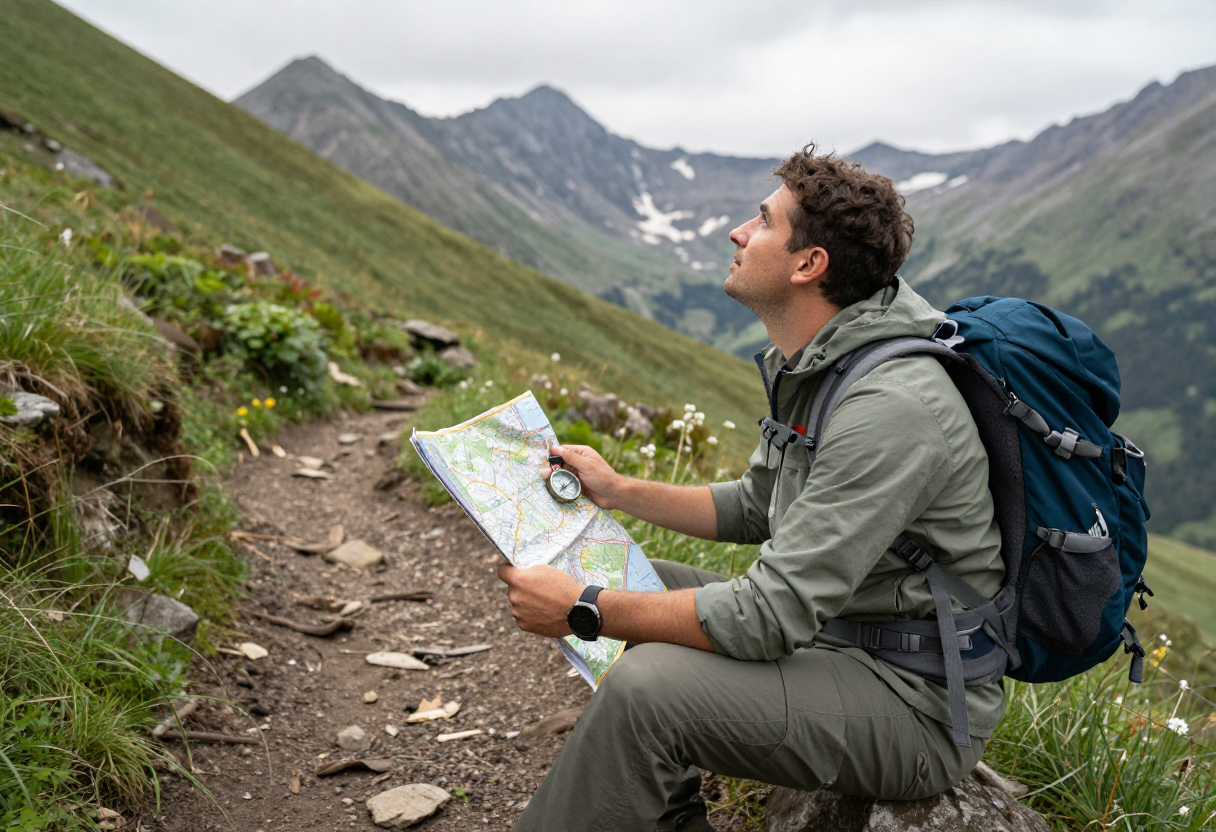
Carry a paper topo map and know how to read the contour lines. A physical map gives you a "macro" view of the landscape that a small phone screen can't replicate. It allows you to see drainage patterns, elevation changes, and potential hazards long before they are right in front of you.
The Compass
A compass is your primary backup. You should be able to take a bearing and follow it even if your electronics fail. This isn't just about knowing how to use the tool; it’s about understanding how to orient yourself relative to the terrain features on your map.
Muscle Memory
The goal is to practice these skills until they become second nature. When you are tired, hungry, or frustrated by a navigation error, your ability to think clearly diminishes. You want the act of checking a bearing or identifying a landmark to be something you can do instinctively. Practice with a physical map and compass in your backyard or local parks before heading into the wilderness so that when things get difficult, your "muscle memory" takes over.
The Golden Rule of the Backcountry: Turnaround Time
One of the most common mistakes I see from beginners—and even some experienced folks who let their guard down—is pushing too hard because they are "almost there." In the backcountry, the distance to the destination is often less important than the time remaining in your day. You must establish a non-negotiable turnaround time before you ever leave your front door.
Set a Hard Deadline
Decide on a specific time (e.g., 2:00 PM) or a specific milestone that, once reached, means you turn around regardless of how close the destination looks. This prevents "summit fever" or the urge to push through just one more mile when the light is fading or your energy is flagging.
Account for Variables
Your turnaround time should factor in potential delays like heavy packs, difficult terrain, and unexpected weather shifts. If you're hiking a trail that usually takes four hours, give yourself at least two extra hours of "buffer" time. This ensures that if you do get turned around or encounter an obstacle, you still have enough daylight to navigate back out safely. When in doubt about local conditions or specific trail hazards, always consult your state’s official wildlife agency for the most current information on backcountry safety and regulations.
Resource Management and Trip Redundancy (Water, Food, Skills)
Navigation is only half the battle; you also have to manage your physical resources effectively. When things go wrong—whether it's a twisted ankle, a washed-out trail, or getting lost—your ability to stay safe depends on how much "slack" you’ve built into your gear and supplies. You need enough of everything to handle the unexpected, not just the planned.
| Resource | Standard Planning | Redundancy Requirement |
|---|---|---|
| Water | Enough for the planned mileage. | Extra for a 4-hour delay or detour. |
| Food | Calories for the day's hike. | High-calorie snacks for emergency use. |
| Navigation | GPS/Smartphone app. | Physical map and magnetic compass. |
| Communication | Cell phone (if service exists). | Satellite messenger or offline maps. |
The Rule of "Plus One"
For essential items, always carry a backup. This means having two ways to start a fire if you're camping, carrying extra water beyond what the trail map suggests, and ensuring your first aid kit is stocked for more than just minor scrapes. You aren't just preparing for a successful trip; you are preparing for a "bad day" in the woods. If something goes wrong, having that extra liter of water or a secondary navigation method can be the difference between a minor inconvenience and a serious emergency.
Inspired by The Trek.
About the Author
David Rodgers is the founder and writer behind Country Trailhead — a Marine Corps infantry veteran, Civil Air Patrol colonel, and Eagle Scout based in Oklahoma, drawing on decades of field-tested hunting, fishing, camping, and hiking experience. Read more about David and Country Trailhead →