
Fix Your Hiking Posture Before You Get Hurt
Long-distance hiking pain often comes down to simple bad habits and weak core muscles. This guide covers everything from quick field posture fixes to specific strengthening exercises you can do at home or in the park.
Written by David Rodgers — October 11, 2026
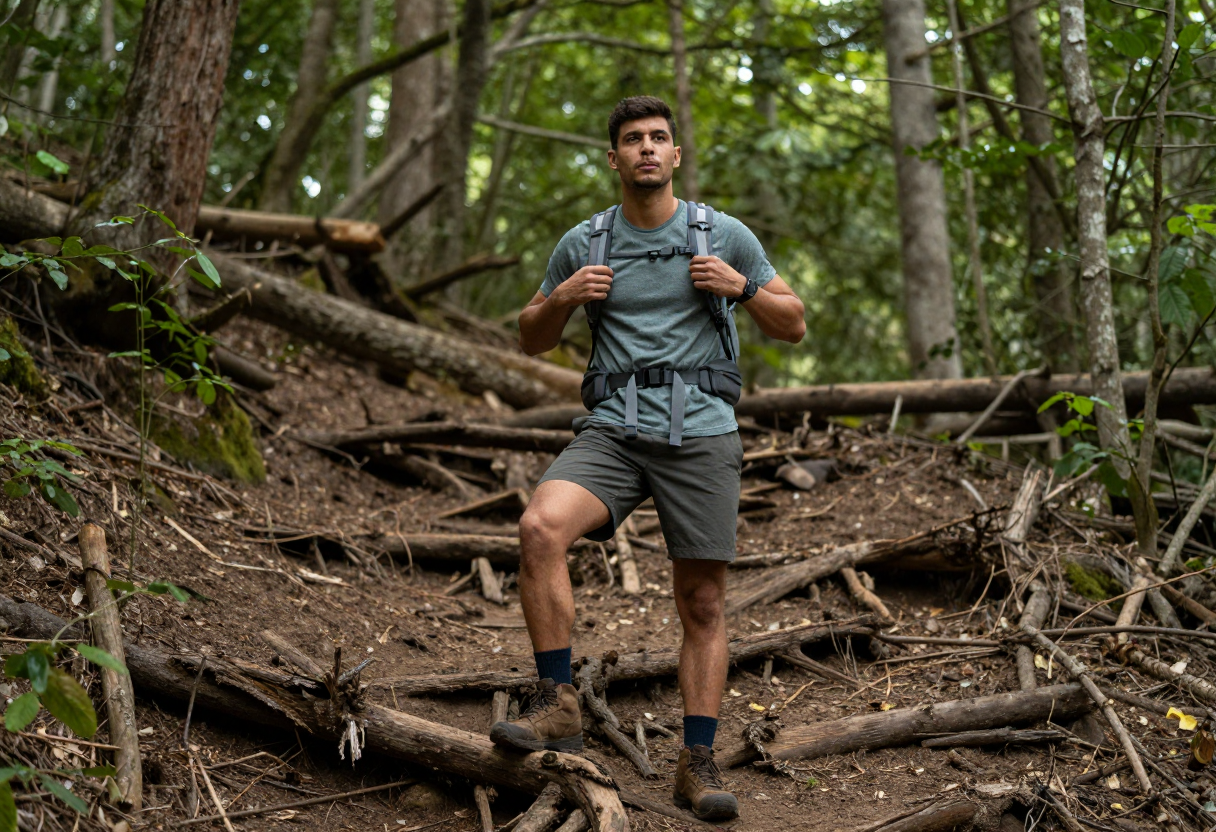
The Real Problem: It's Not Your Back, It’s How You Move

Most people who complain about lower back pain after a long day on the trail assume they have some kind of structural failure or that their "back is out." While you should always take persistent pain seriously and consult a professional if something feels truly wrong, most common hiking aches are actually issues of biomechanics rather than physical damage. When your body isn't supported by proper movement habits, specific muscles—usually the small ones along the spine—become overworked and fatigued trying to compensate for poor form.
Think of your body like any other piece of equipment in the field. If a strap is improperly adjusted on a pack, it puts uneven stress on certain points until they fail. Your body works similarly. When you hunch forward, look down at your feet too much, or let your shoulders shrug toward your ears to "stabilize" a heavy load, you are forcing your back muscles to do the work that your core and legs should be doing. It isn't necessarily that your spine is weak; it’s often just that your form is failing under the stress of distance and weight.
Field Fixes: Quick Posture Checks for the Trail
You don’t need a gym membership or fancy equipment to correct your posture while you are currently on the trail. These are behavioral adjustments you can make every few miles to reset your body's "default" position.
- Eyes Up: One of the most common mistakes is looking down at your feet or just ahead of your toes. This rounds your upper back and puts strain on your neck. Try to keep your gaze on the horizon or about ten to fifteen feet in front of you.
- Drop Your Shoulders: When a pack feels heavy, our instinct is to shrug our shoulders up toward our ears. This creates tension that radiates down into the traps and upper back. Every few minutes, take a deep breath and consciously let your shoulders drop.
- Engage the Core: You don't need to be doing "abs" work while walking, but you should maintain some internal tension. Imagine pulling your belly button slightly toward your spine. This stabilizes your trunk so that your weight is distributed across your hips rather than hanging solely on your lower back.
The Fundamentals of Core Strength (And Why You Need It)
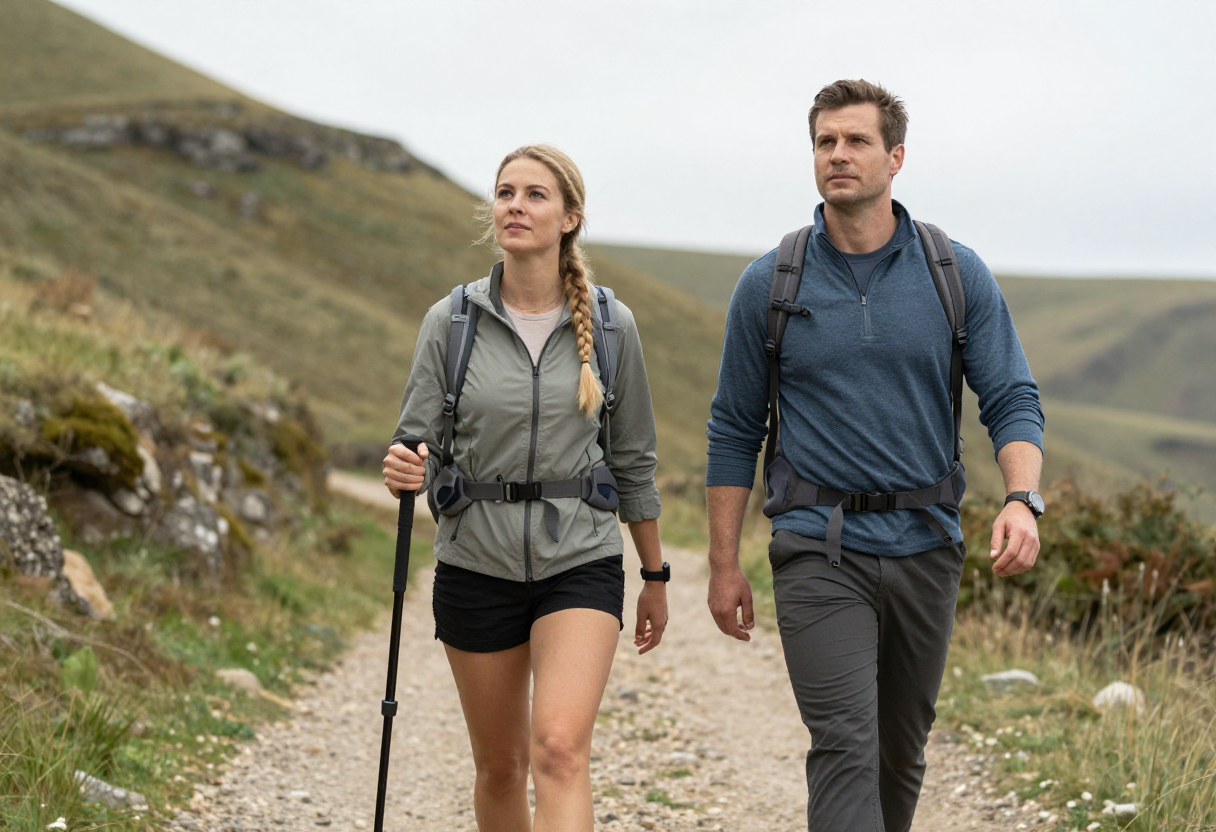
In the context of hiking and heavy pack carrying, "core" doesn't just mean having visible abdominal muscles. Your core is a 360-degree cylinder of muscle that includes your abdomes, your lower back, your hips, and even your obliques. Think of it as the foundation of a building. If the foundation is shaky, everything built on top of it—in this case, your pack and your upper body—will eventually cause the structure to lean or buckle.
When you carry a load over uneven terrain, your core acts as a stabilizer for your spine. It creates a rigid platform so that every step you take absorbs energy through your legs and hips rather than through the tiny joints of your vertebrae. If your core is weak, those small muscles are forced to fire constantly just to keep you upright. By the third or fourth mile, they fatigue, and that’s when the "aching" starts. Strengthening these foundational movements ensures that your body can handle the weight of a multi-day pack without sacrificing your long-term mobility.
Simple Routines: Getting Stronger Off-Trail
Building the strength to support your back doesn't require an elaborate gym routine; it requires consistency with basic, functional movements. You want to focus on exercises that mimic the stability needed for hiking while building a "buffer" of muscle so you aren't starting your hike already exhausted.
- Planks: This is the gold standard for core stability. By holding yourself in a plank position (on elbows or hands), you teach your muscles to work together as one unit. It builds the endurance needed to keep your torso stable under a heavy pack.
- Squats and Lunges: While these are primary leg exercises, they also force your core to stabilize your weight as your center of gravity shifts. Strengthening the glutes and quads reduces the amount of "work" your lower back has to do during uphill climbs.
Start with three sets of each twice a week. You don't need heavy weights; focus on perfect form first. Building this foundation off-trail means that when you finally hit the dirt, your body is equipped to handle the load properly from the first mile to the last.
Inspired by Backpacker Magazine.
About the Author
David Rodgers is the founder and writer behind Country Trailhead — a Marine Corps infantry veteran, Civil Air Patrol colonel, and Eagle Scout based in Oklahoma, drawing on decades of field-tested hunting, fishing, camping, and hiking experience. Read more about David and Country Trailhead →