
Pocket Knives: The Complete Guide
Blade steel, blade shapes, lock types, sizing, sharpening, and legal considerations for choosing a pocket knife that actually fits how you use the outdoors.
Published September 3, 2026
Why a Good Pocket Knife Matters
Of everything in an outdoorsman's kit, a pocket knife is the one tool that crosses every category — hunting, fishing, camping, and hiking all lean on it constantly, for tasks as different as field dressing game and opening a stubborn bag of trail mix. Because it does so much, it's also one of the easiest pieces of gear to get wrong: buying on looks or brand name alone, without matching steel, blade shape, and lock type to how you'll actually use it, leaves a lot of people carrying a knife that's either overbuilt for their needs or frustratingly wrong for the one task they bought it for.
1. Blade Steel Explained
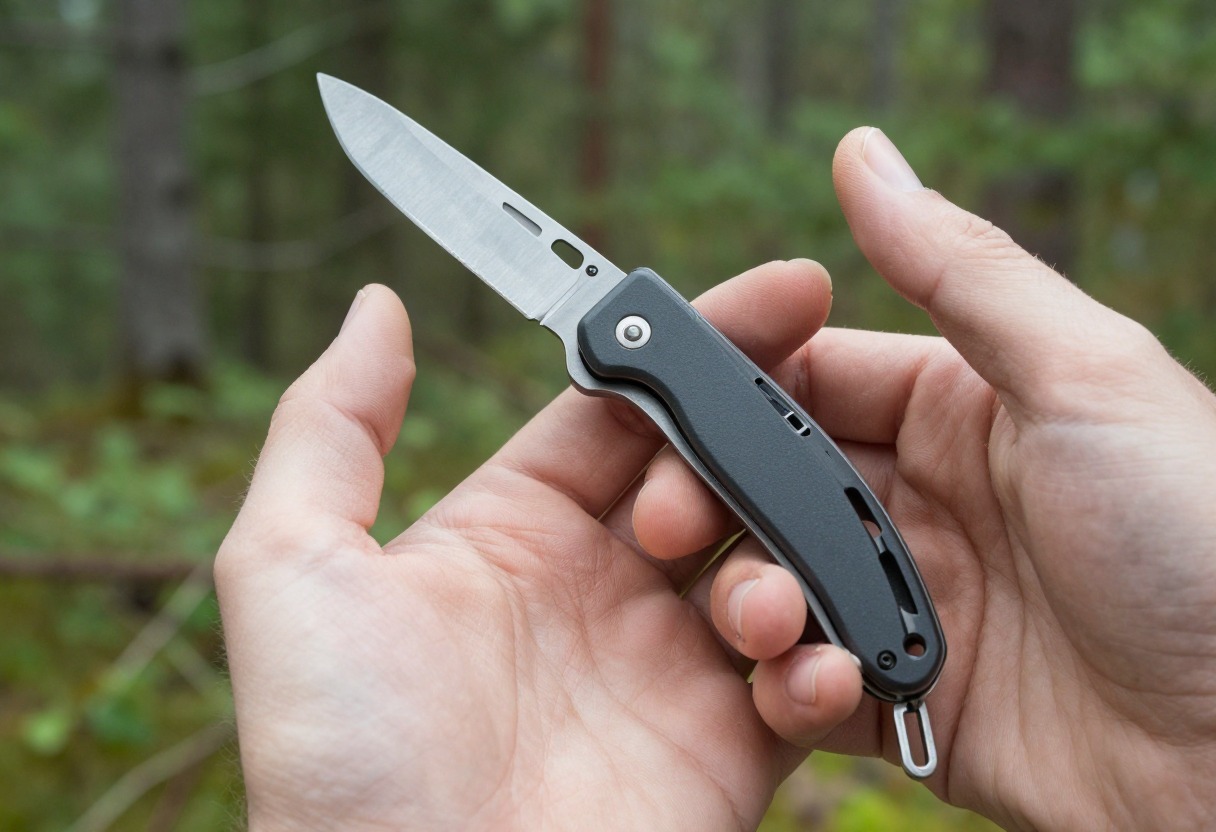
Every steel choice is a tradeoff between three properties: edge retention (how long it stays sharp), ease of sharpening (how quickly you can restore that edge), and corrosion resistance (how well it handles moisture and blood without rusting or pitting). No steel maximizes all three at once.
| Steel Category | Examples | Edge Retention | Ease of Sharpening | Corrosion Resistance |
|---|---|---|---|---|
| Carbon steel | 1095, O1 | Good | Easy | Poor — rusts without diligent care |
| Basic stainless | 420HC, 8Cr13MoV | Fair | Easy | Good |
| Mid-tier stainless | 154CM, 440C, VG-10 | Good | Moderate | Very good |
| Premium powder-metallurgy steel | S30V, S35VN, M390, CPM-154 | Excellent | Harder — needs diamond or ceramic stones | Very good |
Practical takeaway: carbon steel gets scary-sharp easily and holds a working edge well, but demands real maintenance discipline — a genuine liability around water (fishing, rain, snow) unless you're diligent about drying and oiling it. Basic stainless is the forgiving, low-maintenance default for most outdoor use. Premium steels reward hunters and anglers who process a lot of game or fish and value long stretches between sharpenings, at the cost of needing better sharpening tools when the time comes.
2. Blade Shapes and Their Uses
| Blade Shape | Strengths | Best For |
|---|---|---|
| Drop point | Strong tip, versatile belly curve, controllable point | General-purpose EDC, hunting, camping — the most common all-around shape |
| Clip point | Finer, more precise tip for piercing and detail work | Detail cutting, traditional pocket knife and Bowie-style designs |
| Tanto | Very strong, reinforced tip for piercing hard materials | Heavy-duty piercing tasks; less suited to skinning or food prep |
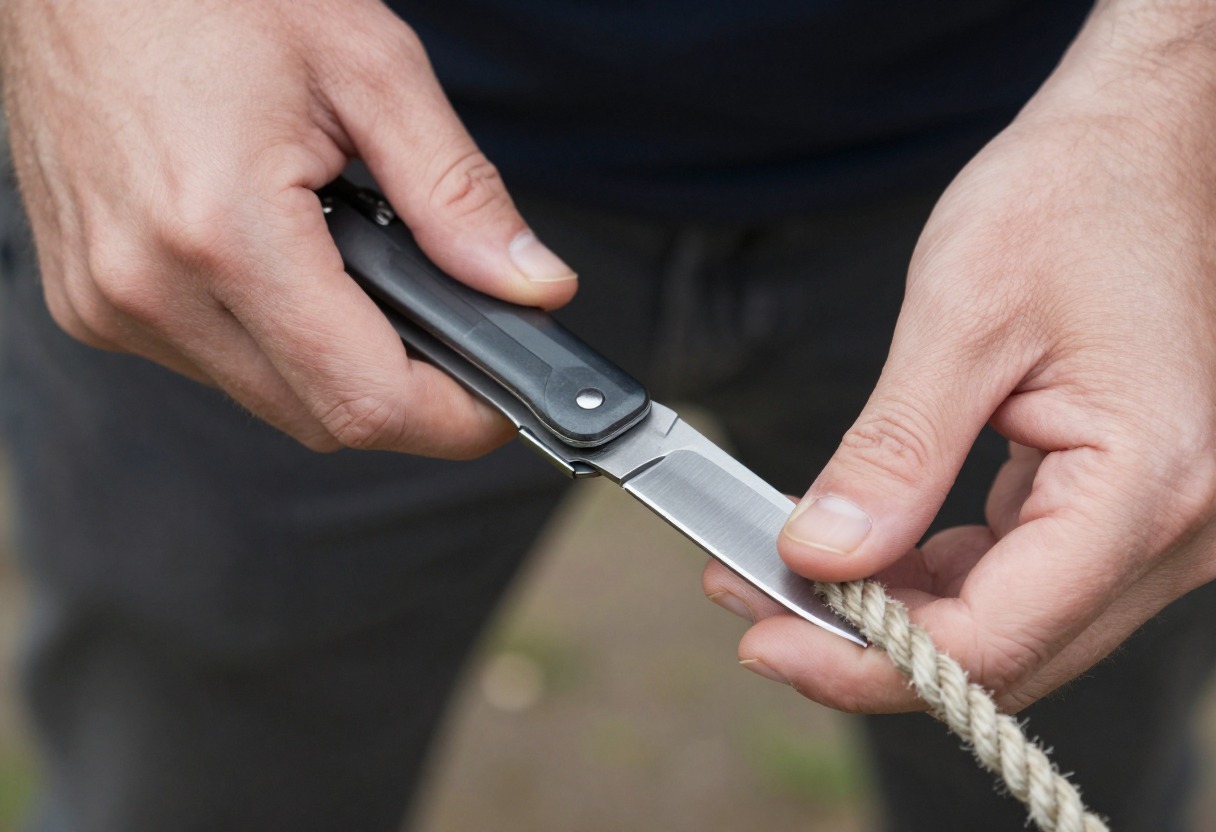
| Sheepsfoot | Blunt, rounded tip with a straight cutting edge | Rope, strap, and seatbelt cutting where a sharp tip is a liability, not an asset |
| Spear point | Symmetrical profile, centered point | Piercing-focused tasks, often on smaller utility or rescue-style knives |
Edge type matters too: a plain edge gives the cleanest push cuts and is easiest to sharpen; a serrated edge tears through fibrous material (rope, webbing) even when it's not razor sharp; a combo edge splits the difference, trading a little of each for some of both.
3. Folding Mechanisms and Lock Types
| Lock Type | How It Works | Strength | Notes |
|---|---|---|---|
| Slip joint | Spring tension holds the blade open, no true lock | Lowest | Traditional pocket knives (Swiss Army-style); folds under enough pressure by design |
| Lockback | A spine-mounted lever locks into a notch in the blade tang | Strong | Simple, proven, but often needs two hands to release |
| Liner lock | A spring-tensioned metal liner slides behind the blade to block it from closing | Good | Very common on modern folders; easy one-handed operation |
| Frame lock | Same principle as a liner lock, but the knife's own frame is the lock bar | Very strong | Thicker and more durable than a liner lock; popular on premium folders |
| Axis/crossbar lock | A spring-loaded bar locks the blade via a cutout in the tang, ambidextrous | Very strong | Smooth, fast, works equally well for left- and right-handed users |
Opening mechanisms range from a simple thumb stud or thumb hole (fully manual), to assisted-opening designs that use a spring to complete the motion once started, to automatic knives that deploy at the press of a button. Assisted and automatic knives open faster, but they're also the mechanisms most likely to run into legal restrictions — covered in Section 6.
4. Handle Materials
- G10: A fiberglass laminate — lightweight, textured for grip, and impervious to moisture. A common, reliable choice across price points.
- Micarta: A resin-impregnated fabric or paper composite — durable, slightly warmer in hand than G10, develops character with wear.
- Titanium: Extremely durable and corrosion-proof, common on premium frame-lock folders; adds cost but not much weight.
- Aluminum: Lightweight and durable, often anodized for color and grip texture, common on mid-to-premium folders.
- Wood, bone, and stag: Traditional materials favored on slip-joint and heritage-style knives; attractive but generally less weather-resistant than synthetic materials.
- Rubber/TPR overmold: Common on budget and outdoor-specific knives for its grip in wet conditions, at some cost to refined looks.
Fixed blade vs. folding: a fixed blade is inherently stronger (no pivot or lock to fail) and better suited to heavy tasks like batoning firewood, but it's bulkier to carry and often more legally restricted for concealed carry than a folder. Most outdoorsmen carry a folder as their everyday tool and add a fixed blade specifically for hunting or camping trips where harder use is expected.
5. Matching the Knife to the Activity
| Activity | Primary Concern | Suggested Direction |
|---|---|---|
| Everyday carry | Versatility, legality, low weight | 3–3.5" drop point, liner or frame lock, stainless steel |
| Hunting (field dressing/skinning) | Control during detail work, edge retention through a full field dressing job | Drop point or dedicated skinning blade; many hunters prefer a fixed blade or replaceable-blade design for this specific task |
| Fishing | Corrosion resistance above all else, especially near saltwater | Stainless or premium steel, smaller blade, sometimes a serrated edge for line and rope |
| Camping / bushcraft | Durability under harder use | Slightly larger folder for general tasks, paired with a full-tang fixed blade for wood processing |
| Hiking / backpacking | Minimizing weight | Smaller, simple lock (liner lock or slip joint), lightweight handle material |
6. Size and Legal Considerations
Blade length restrictions vary significantly by state, and sometimes by city or county on top of that — there is no single nationwide legal blade length, and a length that's fine in one jurisdiction can be restricted in another. Assisted-opening and automatic knives face additional restrictions in some places and are prohibited outright in a few. Carrying across state lines, flying (the TSA prohibits virtually all knives, of any size, in carry-on luggage — checked bags are generally fine), and entering federal buildings or certain public lands can each add their own separate rules on top of your home state's law.
Check the specific, current law for where you're carrying rather than relying on a rule of thumb — this is a genuinely common area where outdated or state-specific assumptions get people in trouble, especially when traveling.
7. Sharpening and Maintenance
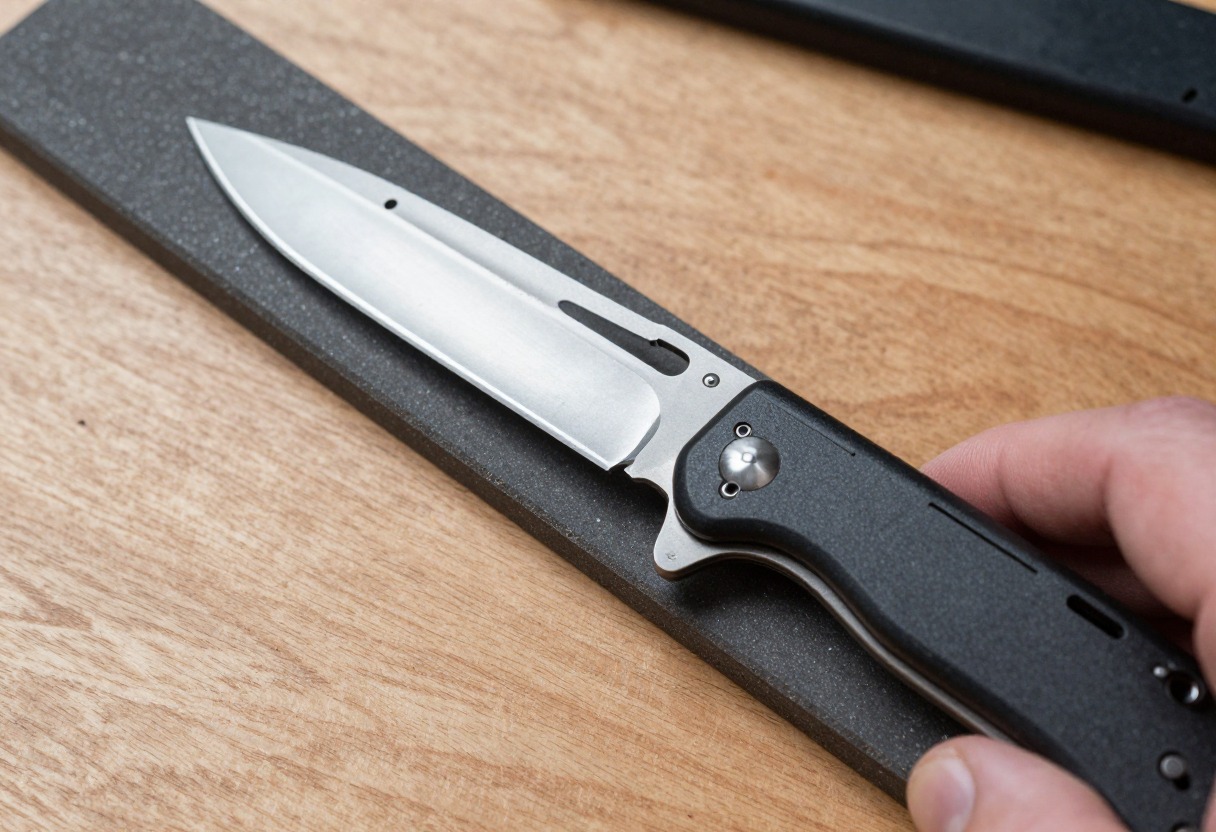
- Sharpening angle: Most pocket knives are sharpened at 15–20 degrees per side; a lower angle produces a finer, sharper edge that's more delicate, while a higher angle trades some sharpness for a tougher, longer-lasting edge.
- Whetstones give the most control and the best long-term results, but take practice to use consistently.
- Guided sharpening systems (fixed-angle clamps and stone sets) remove the guesswork of angle control, a good option for beginners or anyone maintaining several knives.
- Pull-through sharpeners are fast and simple but remove more material over time and generally produce a less refined edge than a stone.
- Stropping (drawing the blade across leather or a strop compound) maintains an already-sharp edge between full sharpenings and takes only a minute.
- Premium powder-metallurgy steels genuinely need diamond or ceramic stones — standard stones struggle to cut the harder steel efficiently.
8. Field Care
- Dry and lightly oil the blade after any wet use — fishing trips, rain, or snow — especially with carbon steel, which can develop surface rust in a matter of hours if left wet.
- Clean blood and food residue promptly after field dressing or cleaning fish; left to dry, it can pit and stain a blade over time, particularly on carbon steel.
- A folding knife is not a pry bar. Lateral stress on a folder is the single most common way to damage a lock or snap a blade — save prying tasks for a fixed blade or a dedicated tool.
- Work the pivot occasionally with a drop of knife-specific lubricant to keep the action smooth, especially after the knife has been wet or exposed to dust and grit.
9. Common Mistakes
- Buying on brand or looks alone, without matching steel, blade shape, and lock type to actual intended use.
- Neglecting maintenance until the knife is dull or rusted exactly when it's needed most — usually mid-hunt or mid-trip.
- Choosing an oversized blade for the task at hand, adding unnecessary weight, bulk, and — in some jurisdictions — legal risk.
- Not checking local and state knife laws before carrying, especially with assisted-opening or automatic knives, or when traveling across state lines.
- Using a folding knife for prying or batoning — tasks that belong to a fixed blade, not a folder's pivot and lock.
- Ignoring handle ergonomics in favor of blade specs alone; a knife that's uncomfortable to grip for extended use undermines even the best blade steel.
10. Budget Overview
| Tier | Typical Range (USD) | What You Get |
|---|---|---|
| Budget | $15–$40 | Basic stainless steel, simple lock, functional but modest edge retention |
| Mid-tier | $40–$120 | Better steel (154CM/VG-10 class), refined action, quality synthetic materials |
| Premium | $120–$300+ | Top-tier powder-metallurgy steel, titanium or carbon fiber construction, superior fit and finish |
| Traditional/heritage | $30–$150+ | Slip-joint designs from legacy brands, valued for craftsmanship and nostalgia alongside practical use |
Budget tip: a mid-tier knife with a well-matched steel and lock type for your actual use will outperform an expensive knife bought for the wrong task. Spend up for premium steel specifically if you process a lot of game or fish and value long stretches between sharpenings — it's a much smaller upgrade in value for someone who mostly opens boxes and trims paracord.
Quick Decision Checklist
- I've matched blade steel to my priorities (edge retention, ease of sharpening, or corrosion resistance)
- I've chosen a blade shape suited to my primary use (drop point for general use, sheepsfoot for rope/strap work, etc.)
- I've picked a lock type appropriate to the demands I'll put on it
- I've considered a fixed blade in addition to a folder for heavier camp or hunting tasks
- I've checked my state's and destination's current knife laws, especially for assisted-opening or automatic knives
- I have a sharpening plan (stone, guided system, or pull-through) matched to my knife's steel
- I know how to care for the knife after wet use to prevent rust and pitting
Glossary
- Edge Retention: How long a blade stays sharp under normal use before needing to be resharpened.
- Tang: The portion of the blade that extends into the handle; on folders, the tang interacts with the lock mechanism.
- Liner Lock / Frame Lock: Lock mechanisms where a spring-tensioned liner or the knife's own frame blocks the blade from closing.
- Slip Joint: A traditional folding mechanism using spring tension alone, with no true lock.
- EDC: "Everyday Carry" — gear, including a pocket knife, carried on a daily basis for general use.
- Stropping: Drawing a blade across leather or a compound-treated surface to maintain an already-sharp edge.
This guide covers general principles for choosing and maintaining a pocket knife for outdoor use. Knife laws — including blade length limits and restrictions on assisted-opening or automatic knives — vary significantly by state and locality and change over time; always confirm current, specific requirements for where you live, travel, and carry.