
Hammock Camping Basics
Setup, insulation, and when a hammock beats a tent for a night outdoors.
Published August 19, 2026
Why Hammock Camping Isn't Just a Novelty
Hammock camping has a real, practical following beyond casual backyard use — it opens up campsite options on uneven, rocky, or root-covered ground where a tent would be genuinely uncomfortable or impossible to pitch well, and many hammock campers report better sleep quality once the system is dialed in correctly. It also comes with real tradeoffs and a genuine learning curve, particularly around insulation, that catch beginners off guard. This guide covers the core setup, the insulation problem that trips up most first-timers, and an honest comparison of when a hammock actually beats a tent.
1. When a Hammock Makes Sense (and When It Doesn't)
| Factor | Hammock Advantage | Tent Advantage |
|---|---|---|
| Uneven, rocky, or sloped ground | Hammock ignores ground conditions entirely, just needs two suitable trees | Tent requires genuinely flat, clear ground |
| Insects and ground moisture | Elevated off the ground, away from crawling insects and ground dampness | N/A specifically, though tent floor also separates from ground |
| Treeless environments (above treeline, desert, open plains) | Not viable without trees or a support system | Tent works regardless of tree availability |
| High wind exposure | Generally more exposed and harder to fully shelter from wind | Tent (especially a lower-profile design) handles wind better |
| Multiple people/shared shelter | Each hammock is inherently single-occupant | Tent naturally accommodates multiple people in one shelter |
| Genuinely cold conditions | Requires deliberate additional insulation setup (see Section 3) or becomes uncomfortably cold | Tent plus a sleeping pad handles cold more intuitively for beginners |
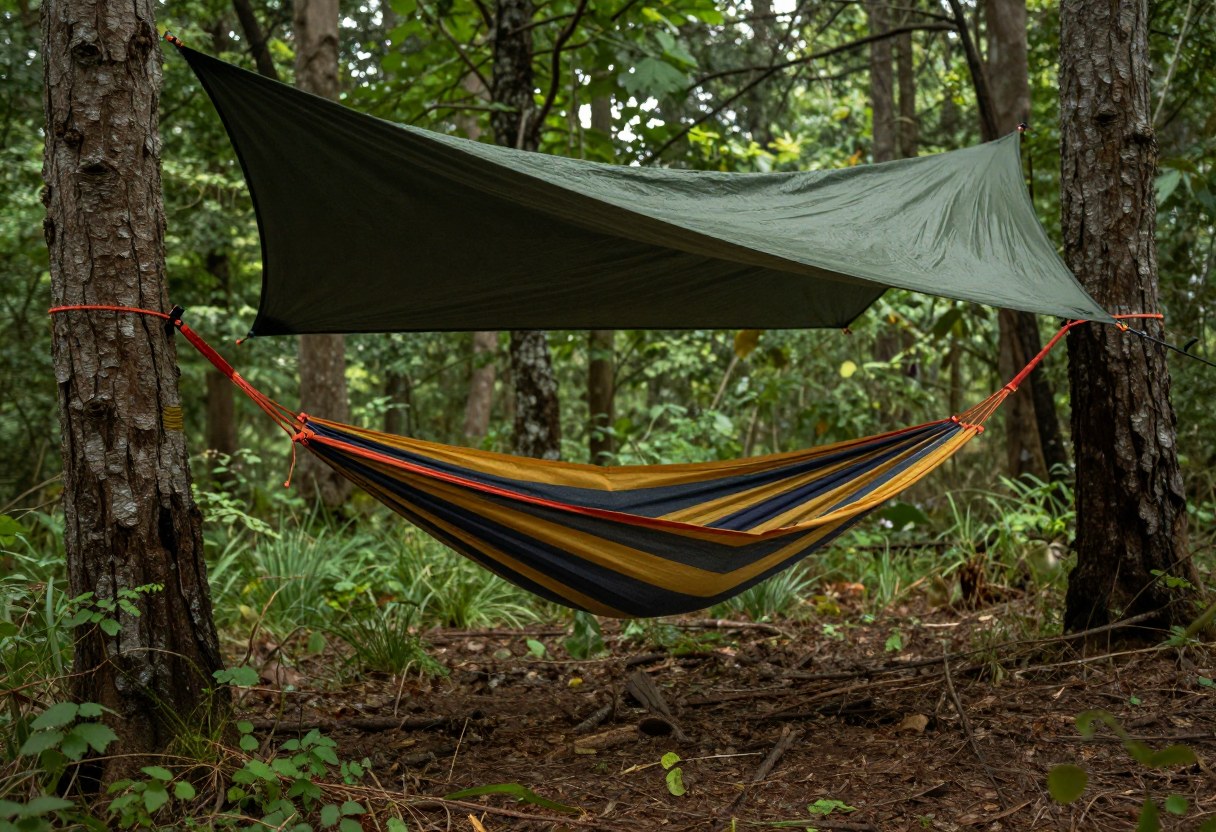
Hammock camping is a strong choice specifically for forested terrain with uneven or rocky ground, and a poor choice for treeless environments, high-wind exposure, or group camping in one shared shelter — matching the environment to the shelter type matters more with hammocks than with tents, which are more universally adaptable.
2. Core Components of a Hammock Camping System
- The hammock body itself, typically ripstop nylon or similar lightweight fabric, sized appropriately for your height and preferred sleeping diagonal (see Section 4).
- Suspension system (straps and hardware), connecting the hammock to trees — tree-friendly wide webbing straps are the modern standard, both more comfortable to adjust and less damaging to tree bark than rope or narrow straps.
- A rain tarp, suspended above the hammock, providing weather protection — sized generously enough to cover the hammock and provide some protection during entry/exit in rain.
- Bug netting, either integrated into the hammock or as a separate attachment, essential in insect-heavy conditions and a near-necessity for most three-season use in many regions.
- An insulation system (underquilt and/or sleeping pad, covered in depth in Section 3) — genuinely necessary for anything beyond mild, warm-weather conditions, and the single most commonly underestimated component for beginners.
3. The Insulation Problem: Why Hammock Camping Feels Colder Than Expected
This is the single most important concept for a beginner hammock camper to understand, and the most common reason first-time hammock campers have a cold, miserable night.
- A sleeping bag alone compresses under your body weight in a hammock, losing much of its insulating loft exactly where you need it most — unlike a tent, where a sleeping pad already handles ground-contact insulation, a hammock leaves your compressed-bag underside directly exposed to cold air moving beneath you.
- This means hammock camping in genuinely cool conditions requires a dedicated underinsulation solution, not just "the same sleeping bag I'd use in a tent."
Underquilt vs. Sleeping Pad in a Hammock
| Method | How It Works | Pros | Cons |
|---|---|---|---|
| Underquilt | A quilt hung underneath the hammock, insulating without compression since it's not bearing body weight | Most effective, purpose-built solution; maintains full loft | Additional cost and gear beyond a standard tent camping kit |
| Sleeping pad inside the hammock | A standard or hammock-specific pad placed inside, under your body | Uses gear many campers already own | Can shift/slide inside the hammock; slightly less effective than an underquilt for most people, though workable for milder conditions |
For anything beyond genuinely warm-weather use, an underquilt is the more reliable, purpose-built solution — a sleeping pad can work adequately for milder conditions or as a budget starting point, but many hammock campers who try both eventually move to an underquilt for meaningfully colder nights.
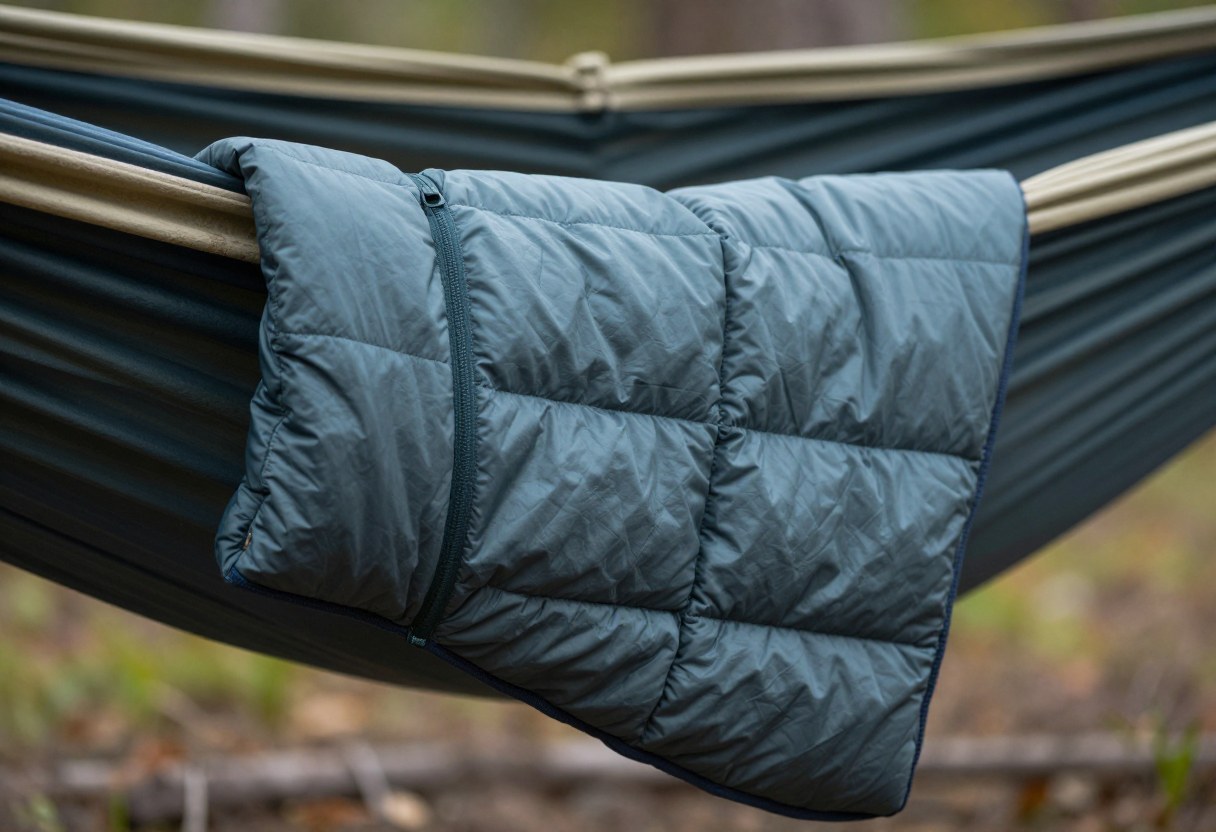
Don't Skip This: "Cold butt syndrome" — the specific, uncomfortable experience of a cold back/underside despite a warm-rated sleeping bag — is the classic beginner hammock camping mistake, caused by underestimating how much a compressed sleeping bag underside fails to insulate compared to ground-based tent camping. Plan dedicated underinsulation before a cool-weather hammock trip, not just your usual sleeping bag.
4. Setting Up a Hammock Correctly
- Choose two sturdy, appropriately spaced trees, generally 12–15 feet apart as a rough starting guideline, adjusted based on your specific hammock's length and desired sag.
- Attach suspension straps at an appropriate height, typically around shoulder height on the trees, adjusting based on desired hang height above the ground.
- Hang the hammock with a proper sag (not pulled too tight) — a moderate sag, often cited as roughly a 30-degree hang angle, is generally more comfortable than an overly tight, flat hang, since it allows a more natural diagonal lying position.
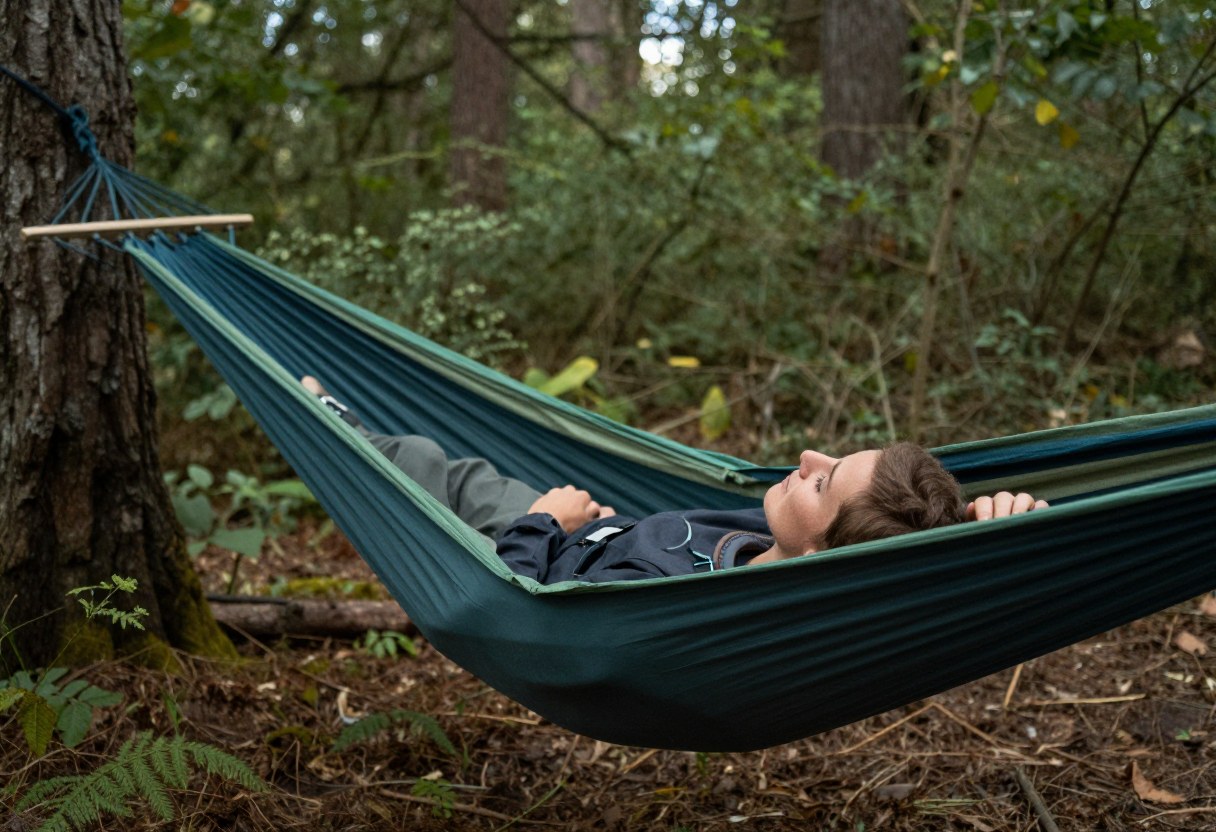
- Lie diagonally across the hammock, not straight along its length — this is the single biggest comfort technique in hammock camping; lying diagonally (rather than banana-curled along the hammock's centerline) produces a much flatter, more comfortable sleeping position for most people.
- Set up the rain tarp above with adequate coverage and clearance, ensuring it extends far enough to protect against wind-driven rain, not just directly overhead precipitation.
- Attach bug netting if using it, sealing entry points properly before settling in for the night.
5. Choosing Trees and Practicing Leave No Trace
- Choose healthy, sturdy trees appropriately sized for hammock suspension — avoid dead, damaged, or clearly unhealthy trees that may not safely support hammock tension.
- Use wide tree-friendly webbing straps rather than rope or narrow straps, which can damage tree bark, especially with repeated use over a season by many campers at popular sites.
- Check specific area regulations, since some parks and land management areas restrict or specifically regulate hammock use to protect trees, particularly in heavily trafficked backcountry areas.
6. Common Hammock Camping Mistakes
- Using a standard sleeping bag alone in cool conditions without dedicated underinsulation, leading to the classic "cold butt syndrome" problem despite an otherwise warm-rated bag.
- Lying straight along the hammock's length rather than diagonally, creating an uncomfortable, curled sleeping position instead of a much flatter, more natural one.
- Hanging the hammock too tight (minimal sag), reducing comfort and the ability to achieve a good diagonal lie.
- Choosing hammock camping for treeless or high-wind environments, where a tent would be the meaningfully better-suited shelter choice.
- Using narrow rope or non-tree-friendly straps, risking damage to tree bark, especially at popular, heavily used sites.
- Not checking area-specific regulations on hammock/tree use, particularly relevant in some heavily trafficked backcountry areas.
Quick Decision Checklist
- I've assessed whether my destination environment (forested, uneven ground) genuinely favors a hammock over a tent
- I have a complete system: hammock body, tree-friendly suspension straps, rain tarp, and bug netting appropriate to conditions
- I have a dedicated insulation plan (underquilt preferred, sleeping pad as a milder-weather option) rather than relying on my sleeping bag alone
- I know how to hang with proper sag and plan to lie diagonally for comfort
- I've chosen healthy, appropriately spaced, sturdy trees for suspension
- I've checked area-specific regulations on hammock and tree use for my destination
Glossary
- Underquilt: An insulating quilt hung beneath a camping hammock, avoiding the compression problem of a sleeping bag's underside and maintaining full insulating loft.
- Cold Butt Syndrome: The common beginner hammock camping experience of a cold back/underside caused by a compressed sleeping bag failing to insulate adequately beneath body weight.
- Diagonal Lie: The technique of lying at an angle across a hammock rather than straight along its length, producing a flatter, more comfortable sleeping position.
- Tree-Friendly Straps: Wide webbing suspension straps designed to minimize damage to tree bark compared to rope or narrow straps.
Final Takeaway
Hammock camping genuinely excels on uneven, rocky, forested terrain where a tent would struggle, but it comes with a real learning curve — particularly around insulation, where a standard sleeping bag alone often isn't enough in cool conditions due to compression under body weight. Plan for dedicated underinsulation (an underquilt for anything beyond mild weather), learn the diagonal lie technique for comfort, and match hammock camping to environments where it actually has an advantage over a tent rather than defaulting to it everywhere.
Hammock camping suitability depends heavily on specific terrain, tree availability, and regional regulations — check current area-specific rules and assess your destination's environment honestly before choosing a hammock over a tent.