Backpacking vs. Car Camping: Choosing Your Style
The gear, planning, and fitness tradeoffs between hiking in with a pack and driving straight to your campsite.
Published August 11, 2026
The Core Difference
Both styles put you outdoors overnight, but the constraint that shapes everything else is different:
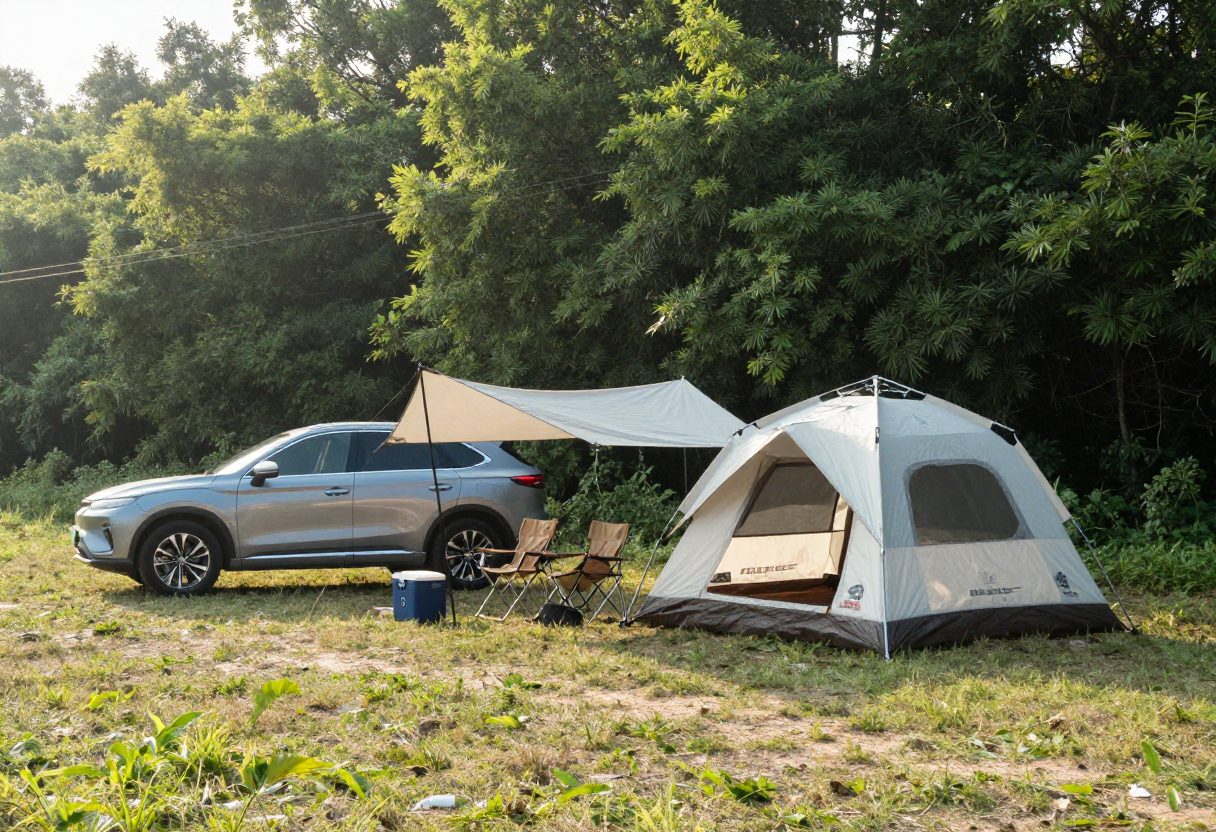
- Car camping: You drive to your site. Your vehicle is your storage locker, and weight essentially doesn't matter. The limiting factor is space in the car and your own effort to carry things from the trunk to the site.
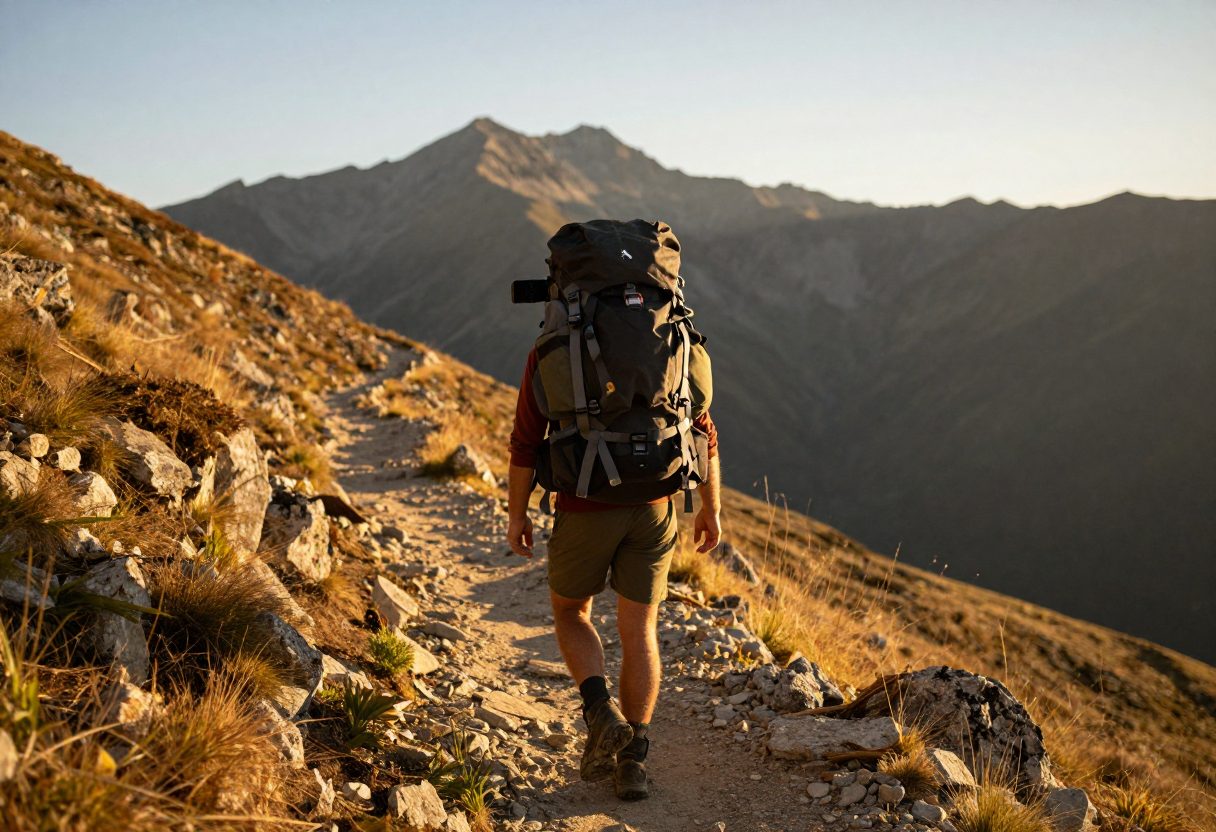
- Backpacking: You carry everything on your back, often for miles, sometimes for days. The limiting factor is weight and volume on your body, and every item has to justify its ounces.
Everything in this guide — gear, cost, fitness, planning, food — flows from that one difference.
1. Quick Comparison
| Factor | Car Camping | Backpacking |
|---|---|---|
| Access to site | Drive directly, or a short carry | Hike in, often 2–15+ miles |
| Weight limit | Essentially none | Typically 20–35 lbs total pack weight |
| Gear cost (entry-level) | Lower — can reuse household items | Higher — lightweight gear is specialized and pricier |
| Comfort level | High (real chairs, coolers, tables) | Lower — minimalist by necessity |
| Fitness required | Minimal | Moderate to high, depending on trip |
| Group size flexibility | Easy to bring large groups | Best in smaller groups (fewer permits, more agility) |
| Planning complexity | Low-moderate | Moderate-high (water sources, permits, navigation) |
| Best for | Families, first-timers, relaxed weekends | Solitude, remote scenery, physical challenge |
| Failure recovery | Drive to town for anything forgotten | Must solve problems with what's on your back |
2. Gear: What Actually Changes
The categories of gear are the same — shelter, sleep system, cooking, clothing, safety — but the versions of that gear diverge sharply.
Shelter
- Car camping: Any tent works. Bigger is often better — more headroom, vestibules for gear, family-size tents that would be absurd to carry on a trail.
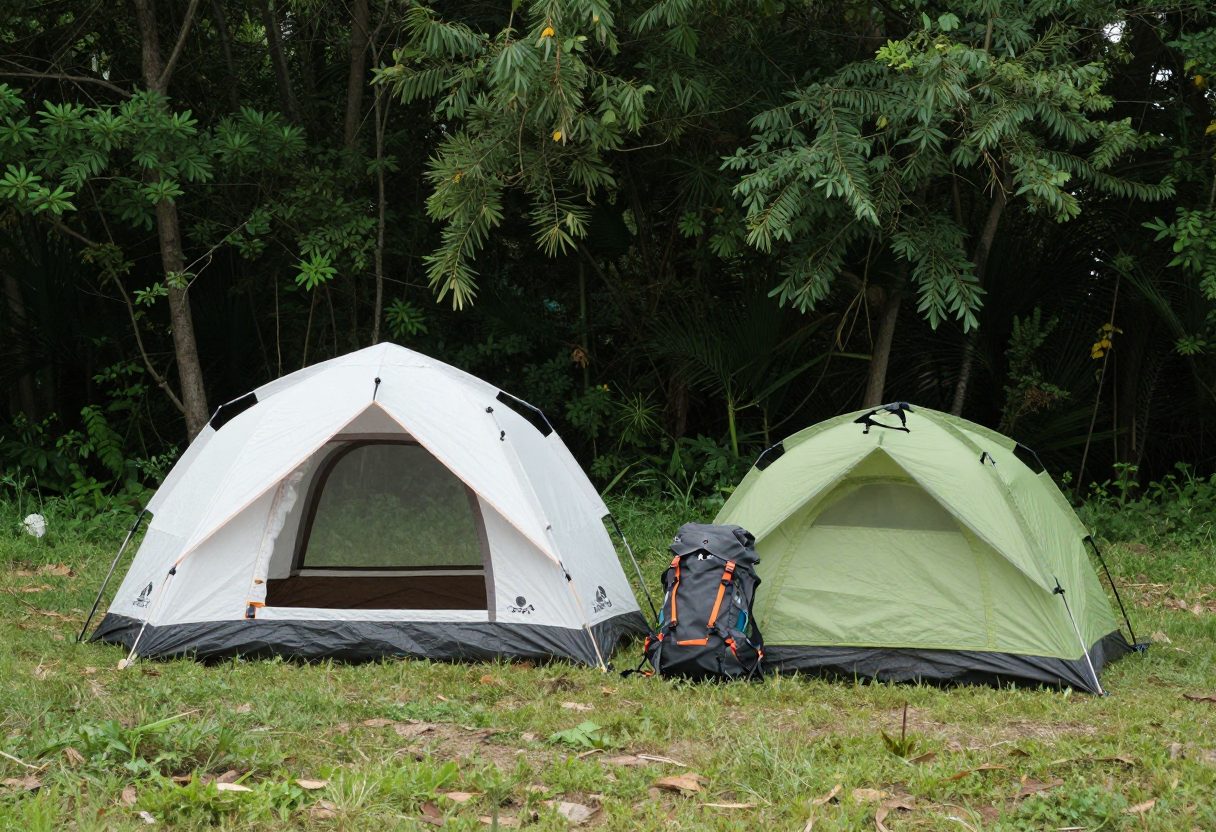
- Backpacking: Weight and pack size dominate. A 2-person backpacking tent typically weighs 2–4 lbs versus 8–15+ lbs for a comparable car-camping tent. Freestanding vs. trekking-pole-supported tents is a common backpacking decision that doesn't exist in car camping.
Not sure which tent fits your trip? Our tent finder walks through season, group size, and budget to point you toward a specific option.
Sleep System
- Car camping: Air mattresses, thick foam pads, and heavy sleeping bags are all fair game since nothing has to be carried far.
- Backpacking: Inflatable or closed-cell foam pads that pack down small, and sleeping bags (or quilts) rated by both temperature and weight/pack size. Down insulation is prized for its warmth-to-weight ratio, though it loses insulating power when wet, unlike synthetic fill.
Cooking
- Car camping: Two-burner propane stoves, full cookware sets, coolers with ice, real plates — a mobile kitchen.
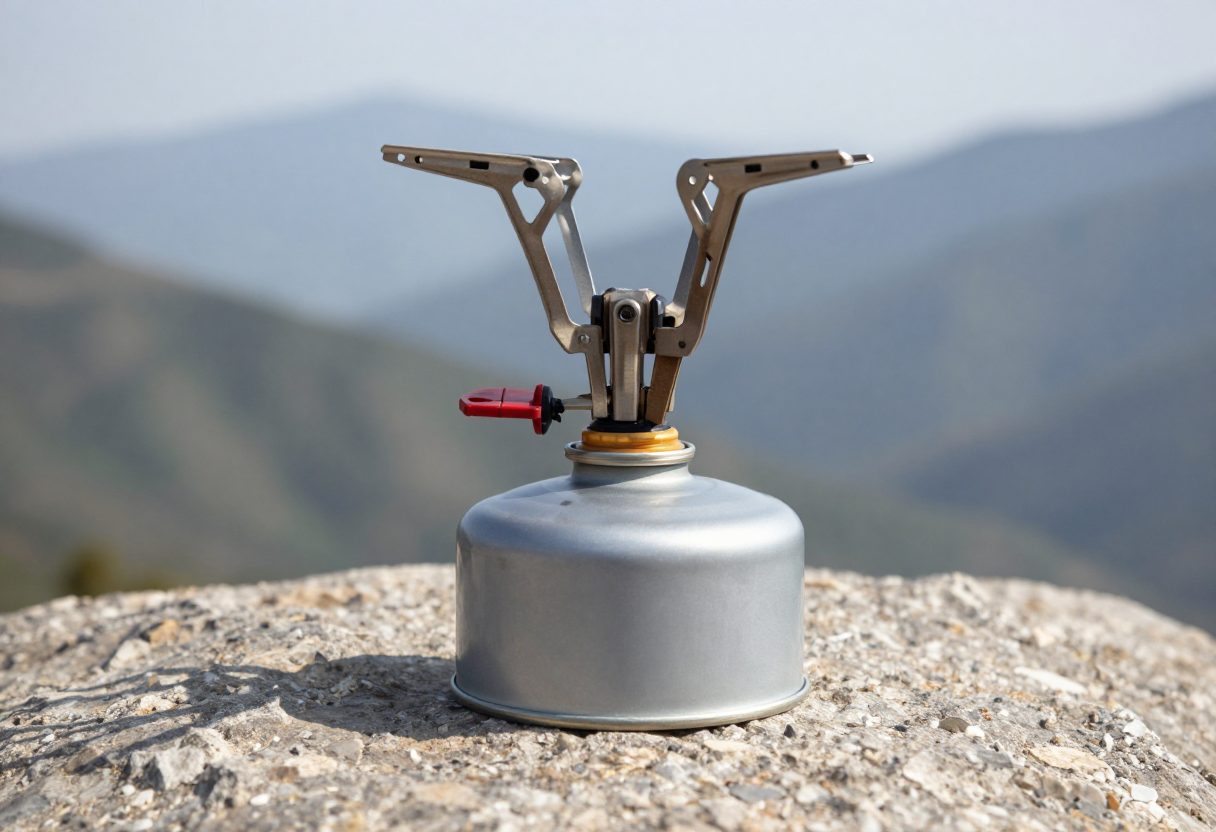
- Backpacking: A single lightweight canister or liquid-fuel stove, one pot, freeze-dried or dehydrated meals chosen partly for calorie-to-weight ratio, not just taste. Water is a major planning factor rather than something hauled in a jug.
Clothing
- Car camping: Pack extra layers freely; comfort clothes (sweatpants, a second jacket) are reasonable.
- Backpacking: Strict layering system, quick-dry and moisture-wicking fabrics only, minimal duplicates — usually one spare set of base layers, not multiple full outfits. Cotton is avoided almost entirely because it retains moisture and loses insulating value when wet.
Water
- Car camping: Bring all the water you need, or refill from a tap or jug at the site.
- Backpacking: Water is sourced from streams, lakes, or springs along the route and must be filtered, treated with chemical drops/tablets, or boiled. This requires route planning around known water sources and carrying a filter or purifier as a mandatory item, not an optional one.
Safety & Navigation
- Car camping: Cell signal is common near most campgrounds; help is usually a drive away.
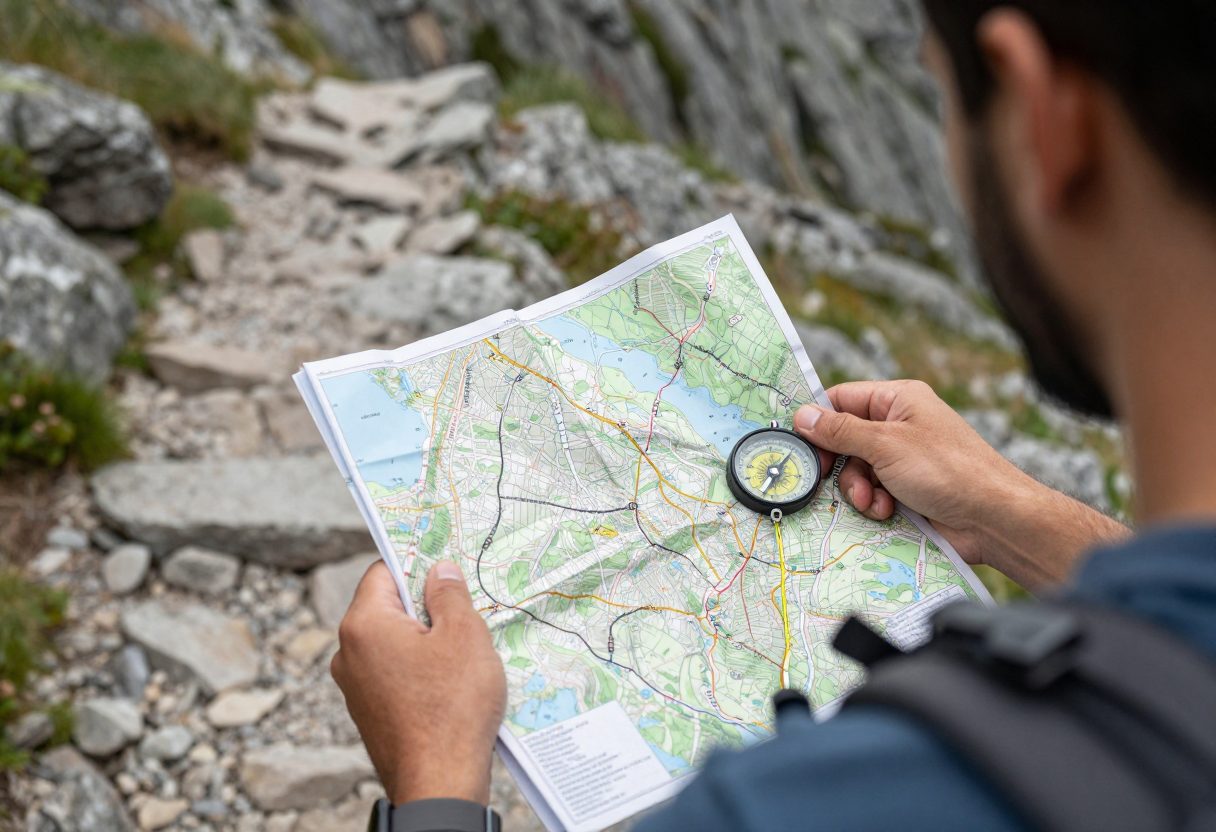
- Backpacking: Offline maps, a compass or GPS device, and a plan for limited or no cell signal are essential. A satellite communicator or personal locator beacon is a serious consideration for remote or solo trips.
3. Cost Tradeoffs
It's a common myth that backpacking is always cheaper because you're not paying campground fees — the gear cost tells a different story.
| Category | Car Camping Entry Cost | Backpacking Entry Cost |
|---|---|---|
| Tent | $80–$200 | $200–$500 (lightweight materials cost more) |
| Sleeping bag | $40–$100 | $150–$350 (down, compressible) |
| Sleeping pad | $20–$60 (air mattress) | $80–$200 (packable, insulated) |
| Backpack | Not needed (duffel/tote is fine) | $150–$350 (a proper framed backpacking pack) |
| Stove | $30–$80 (two-burner propane) | $40–$100 (compact canister stove) |
| Rough total (new gear) | $200–$500 | $650–$1,500+ |
Why the gap exists: lightweight, packable materials (ultralight fabrics, down insulation, aluminum or carbon poles) cost significantly more to manufacture than their heavier, bulkier car-camping equivalents. You're paying a premium per ounce saved.
Ways to bridge the gap:
- Rent backpacking-specific gear (pack, tent, sleeping bag) for a first trip or two before buying.
- Borrow from experienced friends — backpacking gear is rarely used constantly, so it's often available.
- Start with a shorter, easier backpacking trip using slightly heavier car-camping-adjacent gear before investing in ultralight equipment.
4. Fitness & Physical Demands
- Car camping requires essentially no baseline fitness. Walking from car to campsite, and general campsite mobility, is the extent of the physical demand.
- Backpacking requires carrying 20–35+ lbs over uneven terrain, elevation gain, and multiple hours or days. This is meaningfully more demanding than day hiking with a light daypack.
Realistic Preparation for a First Backpacking Trip
- Take a few weekend day hikes with a loaded pack (fill it with books or water jugs to simulate trip weight) before committing to an overnight.
- Choose a short first trip: 3–6 miles in, one night, moderate elevation gain — not a multi-day or high-alpine route.
- Break in hiking boots ahead of time; blisters from new boots are one of the most common reasons first backpacking trips go poorly.
- Build general cardiovascular fitness and some lower-body strength (stairs, hills, or a stair-climber machine translate well) in the weeks leading up to the trip.
Reality check: The physical gap between the two styles is the single biggest reason people default to car camping first, and it's a reasonable default — backpacking rewards experience, and a rough first trip can sour someone on it unnecessarily. Starting car camping, then working up to backpacking, is a common and sensible progression.
5. Planning & Logistics
Car Camping Planning
- Reserve a campsite (many popular campgrounds book out weeks or months ahead in peak season).
- Check what's provided at the site (fire ring, picnic table, potable water, bathrooms) versus what you need to bring.
- Check vehicle access — some "campgrounds" require a short walk-in from a parking area.
- Check fire regulations and any seasonal closures.
Backpacking Planning
- Permits: Many popular trails and wilderness areas require permits, some through lottery systems booked months in advance. This is the single most common planning failure for new backpackers — checking too late.
- Route and mileage: Plan daily mileage conservatively for a first trip; unfamiliar terrain and pack weight both slow you down compared to day-hiking pace.
- Water sources: Identify reliable water sources along the route and carry a filter/purification method sized to the trip.
- Campsite regulations: Many wilderness areas require camping a minimum distance from water and trails, and some require bear canisters for food storage — check requirements before the trip, not on arrival.
- Trip itinerary shared with someone outside the group: More critical than in car camping, given the higher likelihood of being out of cell range.
- Weather sensitivity: Backpacking routes, especially at elevation, are far more exposed to fast-changing weather than a car-camping site with a vehicle nearby to retreat to.
6. Food Planning
- Car camping food planning resembles normal meal planning — fresh ingredients, a cooler, real cooking. Weight and packability aren't real constraints.
- Backpacking food planning centers on calories-per-ounce. Common choices include dehydrated/freeze-dried meals, nut butters, dense energy bars, and instant options that require minimal water and fuel to prepare. A rough backpacking target is often cited around 2,500–4,500+ calories per day depending on exertion and trip length, meaningfully more than typical daily intake, because of the sustained physical output.
| Consideration | Car Camping | Backpacking |
|---|---|---|
| Weight/bulk of food | Irrelevant | Major factor — calorie density matters |
| Refrigeration | Cooler with ice | None — shelf-stable only |
| Cooking complexity | Multi-pot meals feasible | One-pot meals, minimal cleanup |
| Trash | Managed at site/vehicle | Must be packed out entirely, including food scraps |
7. Which Style Fits You?
Use these questions to figure out a reasonable starting point:
- Do you want comfort and social space (families, kids, larger groups)? → Car camping is the easier and more forgiving choice.
- Do you want quiet, remote scenery away from crowds and vehicle noise? → Backpacking delivers this in a way car camping generally can't.
- Is this your first overnight outdoor trip ever? → Start with car camping to learn shelter, cooking, and sleep systems without the added physical and logistical load of hiking in.
- Do you already hike regularly and want more challenge and solitude? → A short, well-planned first backpacking trip is a reasonable next step.
- Is budget a major constraint right now? → Car camping has a much lower entry cost; backpacking gear is a bigger upfront investment.
- Do you have physical limitations or health concerns about carrying weight over distance? → Car camping avoids this entirely, or consider backpacking with a very light pack and short mileage, discussed with a doctor if you have relevant health conditions.
8. Hybrid Options Worth Knowing About
The choice isn't always binary. A few middle-ground approaches:
- Walk-in car camping: Park in a lot and carry gear a short distance (often under a quarter-mile) to a tent site — gets some of backpacking's quiet without full mileage or ultralight gear requirements.
- Base-camp backpacking: Hike in once to a single backcountry site and stay multiple nights, doing day hikes from there instead of moving camp daily. Reduces the packing/unpacking burden of a point-to-point backpacking route.
- Bikepacking or canoe/kayak camping: Uses a vehicle other than your own legs to move gear, opening up different weight tradeoffs than either pure style.
9. Common Mistakes When Switching From Car Camping to Backpacking
- Bringing car-camping gear "just this once." A heavy tent or full-size cookware turns a moderate hike into a miserable one; borrow or rent lighter gear instead.
- Underestimating water needs and sources. Car campers are used to unlimited water; backpackers have to plan around where and how they'll get more.
- Overestimating daily mileage. Trail miles with a loaded pack take longer than casual day-hike pace; plan conservative distances for a first trip.
- Skipping the permit check. Many popular routes require permits booked well in advance — check months ahead, not the week of.
- Not breaking in boots or testing the pack beforehand. Gear needs a trial run before it's trusted on a real trip.
Final Takeaway
Car camping and backpacking aren't a hierarchy — one isn't a "more advanced" version of the other, they're different experiences with different rewards. Car camping optimizes for comfort, accessibility, and group flexibility. Backpacking optimizes for solitude, remote access, and a different kind of physical engagement with the outdoors. Most people who stick with the outdoors long-term end up doing both, choosing based on the specific trip, group, and goal rather than picking one style permanently.
Always check current permit requirements, fire restrictions, and trail or campground conditions before a trip — these vary by location and season and can change with little notice.